


It’s a Small World After All

Updated: Sep 10
A Ride Thru the Black Body as Amusement
Editor's Note
This essay returns selected tings from the archive—here and on Instagram—to a serious harm that occurred five years ago, within and beyond Small World, for which no one was required to take accountability. What appears here is not the archive in full. To be very clear: I retain the complete record, and I have included only what I determined was necessary to establish the terrain without turning this work into an evidence dump.
Selection is restraint—not absence. I am approaching this material through nuance, growth and a wider understanding of what happened, not reopening it for gossip, spectacle or binary judgment. If you cannot move with the complexity of what this essay centers, you do not need to be here. Any attempt to distort, weaponize or redirect what I have written in order to cause further harm will be documented, access will be removed and I will respond through the appropriate protective channels. I do not think anybody involved wants to test the distance between what I have chosen to publish and what I have preserved. I do not think people want to go there.
It’s a Small World After All ◉)) I Hear Tings — One Aural World
From the Amber Tings Spotify Playlist

The sound thread for It’s a Small World After All, where praise becomes proximity, repetition becomes machinery and the Black body remains audible beneath everything attempting to turn attention into evidence of care.
Fatboy Slim — “Praise You” A world where celebration disguises its own extraction. Hidden inside “Praise You” is a guitar sample from the disco recording of “It’s a Small World.” The song’s central voice is also carried through Camille Yarbrough’s “Take Yo’ Praise”—a Black voice lifted, looped and reorganized into the architecture of somebody else’s enormous success.
(articles.roland.com, kiwix.drnathanhutchins.com) The track already contains the essay’s machinery: Disney underneath, Blackness carrying the emotional center and praise circulating loudly enough to obscure who supplied the material.
And yes, I am choosing this song intentionally. “I have to praise you like I should” lands differently when praise has so often been offered in place of material relationship. People can applaud the Black body, nominate it, photograph it, quote it, gather around it and move closer to whatever visibility surrounds it without ever becoming invested in whether that body is resourced enough to remain here.
Fatboy Slim — “Praise You” — the ride keeps moving. The hands clap. The cameras rise. The offering plates remain empty. Proximity calls itself support while the Black body provides the sound, image, language and motion keeping the attraction alive.
Praise is not automatically care. Visibility is not automatically relationship. Three hundred twenty-eight comments can still produce an empty room. The emotion can be real while everything constructed around it remains performance. That is the small world: a closed system in which everybody appears connected because everybody can see each other, while very few people are willing to interrupt the machinery consuming what they came to witness.
Float it for intention wherever you listen to your music tings.
It’s a Small World After All
A Ride Thru the Black Body as Amusement
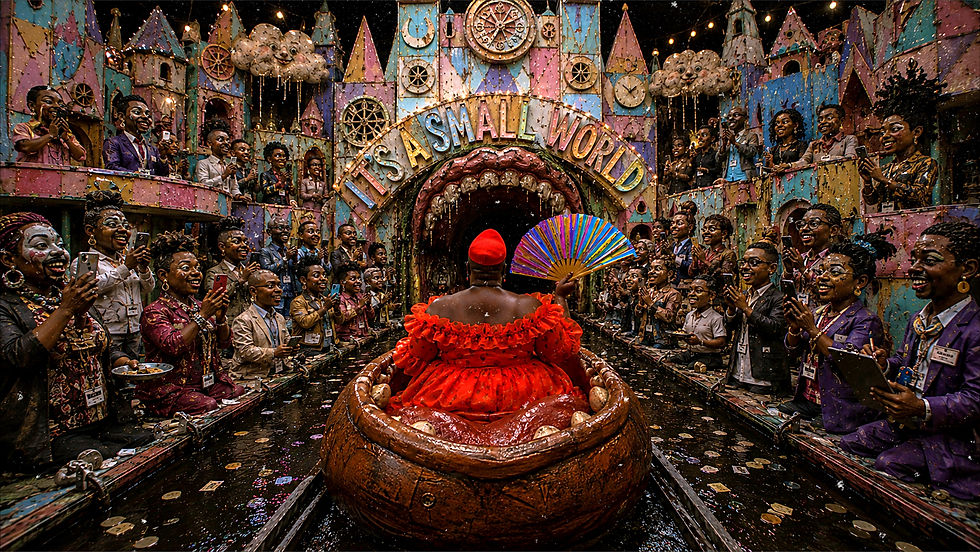
Black Beauty School, OCD, and the Difference Between Attention and Community
Everybody Was Watching. Nobody Was Ready to Work.


There has long been a question moving through my mind: Why am I here? Should I be here?
Before I came into fuller healing, that question could occupy the entire room. Healing has lowered its volume, but OCD does not always surrender a question simply because I have answered it. It repeats. It checks. It returns to the door to see whether the answer has changed. It looks for certainty where certainty does not exist and then panics because it cannot secure the room.
That is not an announcement.
It is not an invitation for somebody to monitor me, interpret me or remove the question from its context so they can perform concern. It is not permission to turn my mind into an emergency while ignoring the conditions I am describing.
It is part of how OCD moves through me.
Uncertainty Does Not Make Everybody Else Honest
I was learning this while I was also learning that people really were watching me. That is the part that becomes difficult to explain because paranoia, pattern recognition and surveillance can all enter the body through the same door. Paranoia can generate the possibility that something is happening. Pattern recognition can notice that something keeps happening. Evidence can establish that something occurred. OCD can then pick up all three, pull them apart, put them back together, revisit every detail and demand that I determine with complete certainty which one I am experiencing.
Complete certainty never arrives.
But uncertainty does not make everybody else honest.
OCD did not invent the cyberstalker. It did not create the stories being carried between people. It did not cause individuals to perform one relationship with me publicly while participating in something else behind the screen. It did not make people enter my Instagram Lives, gather information and then behave in ways that revealed they had never entered the room with the intention I believed we shared.
OCD made me revisit the evidence.
It did not manufacture the evidence.
Black Beauty School Grew Inside This Terrain

Black Beauty School grew inside this terrain.
I was not standing beside the work taking pictures of myself near it. I was the Artistic Director. I was carrying set design, casting, visual narrative, hair, makeup, education, logistics and the physical movement of a national tour.
Black Beauty School was hair culture, memory, relationship and community practice made material. It was mannequins and stories and bodies and cities and all the invisible labor required to make an idea capable of holding people.
I showed up.
Not as a caption. Not as a declaration. Not as a person arranging the appearance of care from the safety of a screen.
I showed up in cities. I crossed state lines. I moved relationships that began online into material space because I believed community should eventually become something more than our ability to recognize one another’s usernames. I believed that if people had found me through the work, spoken to me through the work and claimed relationship to the work, then showing up was how we would learn what we could actually build together.
I do not know that I will continue doing that.
Not because online relationships are inherently false. Not because everybody I encounter through a screen is dangerous. But I can no longer allow digital familiarity to assign me material obligations before the other person has demonstrated any capacity for relationship.
People knew me because they watched me.
I thought some of them knew me because they were in community with me.
Those are not the same thing.
They Could Have Worked With Me

There was a specific relationship inside this period that I need to handle carefully—not because the material is unclear, but because I do not need to turn somebody’s private struggle into public spectacle in order to name what they did with my care.
I stayed in their home.
That proximity allowed me to see what social media could not. I could see the condition of their mental health. I could see how difficult it was for them to care for themselves. I did not treat that as gossip, content or evidence that they were undeserving of relationship.
I showed up.
When they were harmed during a hair demonstration in Chicago, I used my platform to name what had happened. I defended a fat Black femme whose hair had been mishandled by an institution that should have known better. I understood that what happened to their body was connected to a much larger failure inside beauty education, and I was willing to place my voice beside theirs.
But what they attempted to bring back to me was not work.
There were two Black femmes in this situation who could have worked with me directly. Black Beauty School was right there. The artistic practice was right there. The opportunity to build something around Black hair, beauty, education and material care was right there.
Instead, they wanted to show me how much they knew how to gossip.
They brought me mess that was not my business. They carried stories about other people, fragments of conflict and information I had not witnessed, then expected me to enter the situation as their defense. They wanted my voice, my visibility and my willingness to speak plainly to become protection from situations they were already participating in.
I was not going to do that.
Knowing everybody’s business is not the same as knowing how to build. Carrying information between people is not community practice. And asking a Black person with visibility to confront somebody on your behalf is not accountability—especially when the people involved could have spoken directly to one another without recruiting me as emergency infrastructure.
Then I watched the stories change.
I watched details appear that were not true. I watched performance become evidence simply because enough people were willing to repeat it. I watched somebody who had accepted my care, my defense and my proximity begin behaving as though they could supersede work I had been committed to for years.
Later, they became a licensed aesthetician.
The license is not the center of this story. It does not make their mental health relevant as a disqualification, and it does not mean somebody must have mastered caring for themselves before they can ever care for another body.
What stayed with me was the performance of authority.
A new credential appeared to become proof that they could move beyond the work I had already been building—work grounded not only in licensure, but in sustained study, artistic direction, Black beauty education, material practice and years of relationship with Black bodies.
They did not build with me when the invitation was available.
They did not enter Black Beauty School through curiosity, reciprocity or shared labor.
They brought gossip. They requested defense. They accepted care. Then they positioned themselves as though proximity to the work—and eventual certification within the same beauty system I was critiquing—had made them capable of superseding it.
That is part of the difference between attention and community.
They were close enough to see the work.
They were close enough to benefit from the person building it.
They were never ready to work.
I Thought I Was Hosting a Room
I did Instagram Lives where people appeared to be participating in one room while performing entirely different arrangements behind the scenes. They entered the comments. They watched the conversations. They learned my language, my sensitivities, my practices and the direction of my work. They had access to my face, my home, my thinking, my diagnosis, my relationships and the ways I attempted to make care visible.
Clubhouse.
I don’t have the words.
I should have NEVER.
I thought I was hosting a room.
Some people were attending a performance.
Some were studying me.
Some were carrying information elsewhere.
Some were coordinating outside the frame.
Some were waiting to see what my care would make available.
A Live makes everybody appear to be in the same place. The screen gives us one interface, one comment section, one count of the bodies supposedly present. But everybody is not entering through the same intention. Everybody is not there to work. Everybody is not there to tend the room. Some people are there because watching grants proximity without requiring them to become accountable for what they see.
A Follower Count Is Not a Community

It is a record of who has been given the ability to watch.
For a long time, the number beside my Instagram name made people imagine that I possessed an authority I did not claim and a capacity they had no intention of supporting. They wanted me to confront situations I did not witness. They wanted me to report information I did not have. They wanted me to tattletale on things nobody had explained clearly enough for me to determine what had actually happened.
They wanted my voice to absorb the danger of their silence.
That was called accountability.
But accountability cannot be built from withheld information and delegated risk. I will not immediately move into judgment against Black bodies because someone has decided my visibility makes me a convenient weapon. That does not mean I am unwilling to speak.
I always speak.
When I know something is wrong, I cannot hold it inside. I have spoken when it cost me relationships. I have spoken when people lied about me afterward. I have spoken when the truth did not produce protection, understanding or support. I have stood on the side of saying what happened even when everybody else in the room benefited from pretending it had not.
But speaking from what I know is different from being recruited to perform condemnation on demand.
When I received proper information, I removed myself accordingly.
That was not cowardice.
That was not complicity.
That was discernment.
Was Black Beauty School Ever Hosted in Chicago?
During that summer, we were spending recreational time in Chicago while the work of Black Beauty School had us split between both coasts. Even calling it recreational time feels strange now because I do not know how often I was permitted simply to arrive somewhere and be a person. We entered the terrain of another entity that was already causing deep harm. The harm had been happening. People knew it had been happening.
People had been living in relationship to it.
And was Black Beauty School ever hosted in Chicago?
Absolutely fucking not.
That was my entire goal for being there. I was trying to determine whether Black Beauty School could be held in Chicago, whether people were prepared to build the material relationships required to host it and whether the language surrounding community could become actual infrastructure for the work.
Instead, I got caught up in a bunch of bullshit that had already been circulating before I arrived.
Then they looked toward me.
I was supposed to resolve something I had not created inside a structure I did not control, using information people had not responsibly carried themselves.
They were looking for a fucking savior.
That remains absurd to me.
Nobody Was Ready to Work

I arrived partly to see who was ready to work. I was interested in what could be built, what people were prepared to carry and whether all the language surrounding community could survive contact with material responsibility.
Nobody was ready to work.
Everybody was ready to take.
If I drew up a bill from that summer you all would cry.
I cried.
I was spending coins in community it was not reciprocated.
Decorated an entire holiday party out of my pocket.
Everybody was ready to tell me what was wrong.
Everybody was ready to identify the person who should confront somebody else.
Everybody was ready to explain what another body had failed to do.
Everybody was ready to place the emergency in my hands.
But nobody had constructed the infrastructure that resolution would require. Nobody wanted to stand visibly inside their own knowledge. Nobody wanted to accept the risk of telling the truth with their own mouth. Nobody wanted to examine how their silence, performance or refusal had helped the harm remain in circulation.
They wanted the number beside my name to become emergency government.
They did not support my work. They did not resource the infrastructure. They did not help carry the artistic, educational or logistical system I was building. But when the environment began collapsing, they believed my visibility should become public authority on their behalf.
I was useful as a voice long before I was supported as an artist.
Who Was Curious?

That same voice was talking about fungi then, it was doing the work in my body that would allow me to quit alcohol completely in 2022.
Who was curious?
Nobody.
Overheard conversations where persons decided what my body would do in their personal circles.
Never once was it discussed with me.
Whether they knew it or not I was paying full fucking attention.
They Asked What My Care Could Carry
That is part of what makes this so difficult to hold now. My craft is in full bloom. I am deeply dedicated to it. I have spent years building an interdisciplinary language capable of holding bodies, water, Blackness, neurodivergence, hair, ecology, movement, color, sound, memory and relationship together. I do not dabble in my work. I tend it. I return to it. I build worlds that stories can live inside.
But again and again, people approached the artist and attempted to recruit emergency infrastructure.
They did not ask what the work needed.
They asked what my care could carry for them.
Some pretended we had similar skill sets, when we did not.

When we got behind the camera they were mimicking the way I flow.
New behind a camera not someone studied. I could see clearly but I allowed the performance to be.
And because intention and nurturing are part of my creativity, I often responded by showing up. I believed that my willingness to enter material relationship might call forth the same willingness in somebody else. Sometimes it did. Too often, it revealed that another person had recognized my intention as something they could use.
I do not need to become less intentional.
I need to stop assuming my intention is shared.
They Wanted the Story About Me to Explain the Smell

The cyberstalker understood the environment.
They wove in and out of people already connected to one another, gathering fragments and generating an obscene story about me. The story did not succeed because it was coherent. It succeeded because the people receiving it were already living inside situations they were not being honest about.
Making me dishonest was easier than recognizing their own decomposition.
If I was lying, unstable, dangerous or secretly orchestrating everything, then nobody else had to look directly at what was rotting around them. Nobody had to ask why their own relationships could not withstand factual examination. Nobody had to admit what they had withheld, what they had performed or what they had allowed to continue because truth would have required movement.
This was not compost.
Compost is decomposition entering relationship. Compost is tended. It is aerated. It is turned. Heat moves through it. Time moves through it. What has broken down becomes capable of feeding life because somebody remained in relationship with the process.
This was mold inside a sealed container.
Nobody wanted to open it. Nobody wanted to identify what had spoiled. Nobody wanted to throw away what could no longer nourish anything.
They wanted to put my name on the container.
They wanted the story about me to explain the smell.
The Autistic Body Can Be Made to Look Obsessive for Continuing to Ask

All of this was happening while I was in the middle of understanding that I had a diagnosis. I was learning that experiences I had been disciplined for were not character failures. I was learning what autism and OCD had been doing inside a Black body that people repeatedly described according to whatever story made my behavior easiest for them to use.
I was learning why I repeated questions.
Why I searched for the missing piece.
Why contradiction could become physically unbearable.
Why I could not simply pretend I had not seen what I had seen.
Why “let it go” was often an instruction to abandon my own perception before anybody else had to become accountable.
I was also learning that an autistic person’s desire for clarity can be used against them. If the surrounding people refuse clarity, the autistic body can be made to look obsessive for continuing to ask. If the story keeps changing, OCD can keep returning to it. If somebody is actually lying, every new inconsistency becomes another object the mind feels required to resolve.
Then the fact that I am still looking is presented as evidence that I am the danger.
Surveillance becomes paranoia once the watched person names it.
A lie becomes interpersonal conflict once the Black person documents it.
A pattern becomes obsession once the autistic person refuses to stop seeing it.
And an institution can subject a Black body to an unbearable process and later point to that body’s completion as evidence that everything worked.
Something Happened to My Body

I know that structure from graduate school.
A white woman in my cohort falsely accused me. The accusation stood long enough for me to be taken through an entire institutional process. Nothing ultimately happened because she was lying, but “nothing happened” is the language of the institution.
Something happened to my body.
Something happened to my mind.
The process almost took me out of here.
Then I was encouraged to continue.
I finished.
I received the master’s degree.
I should not have.
Not because I was incapable of completing the work. I should not have been required to survive those conditions in order to prove I could complete it. The degree does not retroactively transform the environment into support. Completion does not mean the institution held me. Survival does not prove that the process was survivable.
Recognition Is Not Protection
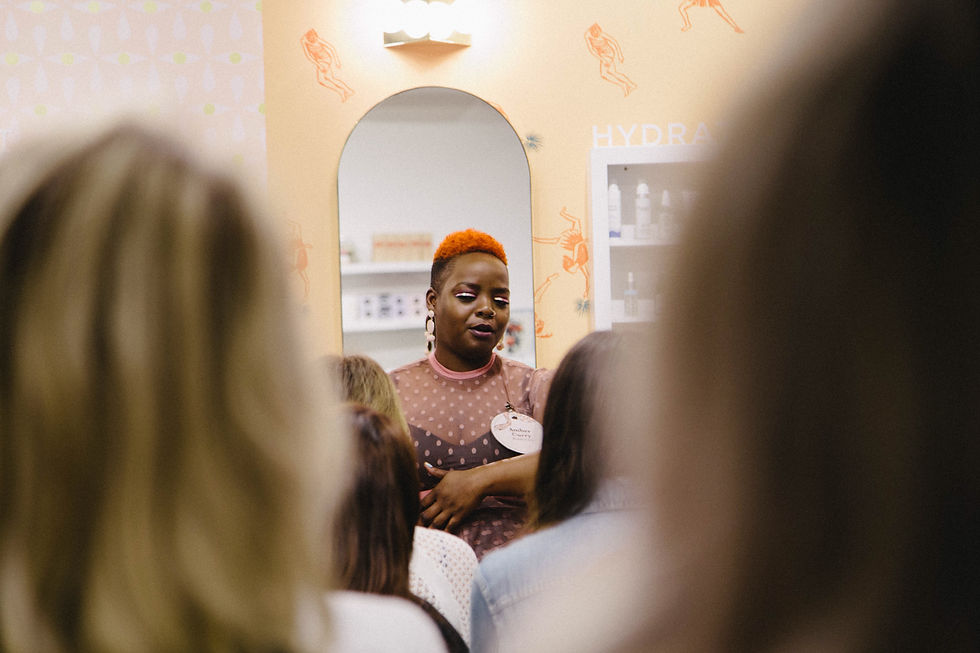
This is part of what I recognize in Professor Jason Arday, a brilliant Black autistic professor in the United Kingdom who became symbolically enormous inside higher education.
I am not interested here in turning toward the institutional investigation that surrounded his final days. I already know what it means for an institution to initiate a process and then allow the existence of that process to become its own story. I know what happens when the Black body’s distress becomes secondary to the institution’s need to demonstrate that it has procedures.
What I recognize is disposability.
Higher education knows how to elevate the Black autistic exception. It knows how to place our brilliance inside announcements, initiatives and public narratives about access. It knows how to use the arrival of a Black autistic body as evidence that the institution is opening.
But recognition is not protection.
Visibility is not support.
Appointment is not infrastructure.
The institution can celebrate Black autistic brilliance while remaining incapable of holding the Black autistic person carrying all that symbolic weight.
The Question Is What Their Seeing Required Them to Do

We already know this structure beyond academia. Black Lives Matter did not emerge because Black people lacked public visibility. Sandra Bland was visible. Her voice was audible. Her distress and the violence surrounding her were not hidden from the systems that held power over her. Black bodies can be watched continuously and still be treated as disposable.
The question is not whether anybody saw us.
The question is what their seeing required them to do.
I remain close enough to higher education to recognize the distance between institutional language and institutional life. I dealt with it at Oberlin College. I can see the structure without pretending I am authorized to tell every part of that story.
Institutions speak fluently about access, diversity, community and neurodivergence. The bodies closest to their daily machinery live the distance between the statement and the support.
Social media reproduces that distance at a smaller scale.
People can speak fluently about my work while never supporting the body producing it. They can know when I post, where I travel, what I am building and how my mind moves. They can recognize my language when it appears somewhere else. They can watch the Lives, read the essays and observe the work becoming more precise.
They can do all of that without entering relationship.
That is why I removed so many people from my social media, and why I will continue to do so.
I am not removing people because they failed to prove that they like me. I am not requiring constant applause. I am not demanding that every person respond to every post.
I am refusing silent access as a neutral condition.
After surveillance, cyberstalking, manufactured stories and people performing community while coordinating beyond the frame, I do not owe everybody an uninterrupted window into my life. You cannot remain close enough to study me while staying too distant to support the work. You cannot consume the evidence of my becoming and call your observation community.
Attention without intention is not relationship.
Access without reciprocity is not support.
Watching is not witnessing.
A witness becomes responsible for what they have seen.
Wake Up to the Work
I need people who want to be in community with me to wake the fuck up.
Not monitor me more closely.
Not convert my language into an assessment.
Not search my sentences for an emergency while ignoring the material conditions I am naming.
Wake up to the work.
Wake up to what it costs to make it.
Wake up to the difference between my visibility and my support.
Wake up to the body producing the art before that body has to become a crisis for anybody to acknowledge that it was here.
If something is wrong, tell the truth about what you know. Do not hand me fragments and ask me to become the judge. Do not ask my platform to absorb the risk you refuse to carry. Do not invite me into an emergency and call my ability to recognize the damage leadership.
Carry your part.
Resource what you claim matters.
Engage intentionally.
Care Requires a Gate

Care is still part of my creativity. Nurturing is still one of my tech(know)logies. I am not amputating those things because other people recognized how to exploit them.
But care requires a gate.
Discernment decides who enters.
Boundary decides what remains available.
I am no longer treating every person who recognizes me as somebody prepared to know me. I am no longer treating every declaration of community as evidence that community exists. I am no longer crossing digital, state or national boundaries simply because somebody has learned how to speak in the language of shared intention.
Everybody was watching.
Nobody was ready to work.
I do not need more people watching me survive.
I need the people who claim relationship to wake up while I am already here.
Because if not, you’re just on a ride through the Black body as amusment.
And my body is not a park for play.
It’s a Small World After All
Cosmos Watershed Blurb
This essay begins in Still Water, listening to the persistent OCD question: Why am I here? Should I be here? It enters Flowing Water through social media, where attention circulated faster than responsibility and online familiarity was repeatedly mistaken for community. Deep Water holds the material labor of Black Beauty School, the body crossing cities and the diagnosis arriving while the work was already underway. Turbulent Water carries cyberstalking, false stories, delegated confrontation and the expectation that visibility should become emergency leadership. Tidal Water reveals the pattern repeating across graduate school, higher education, Chicago and Instagram. Sacred Water returns care to discernment: nurturing remains a creative technology, but boundary decides where it can live.
Cosmos Watershed
Watershed | Tributaries |
Watershed | Moving from being watched without being held toward intentional and materially reciprocal community |
Relationship | Social-media audiences; online connections; Black Beauty School collaborators; Black communities; educational institutions; followers who confuse access with relationship |
Companion | Discernment—the embodied practice that distinguishes an intrusive possibility from a repeated pattern, a repeated pattern from evidence and attention from intentional engagement |
Origin | Building Black Beauty School while converting online relationships into material presence, creative labor and embodied community |
Expansion | Instagram Lives; Black Beauty School’s national movement; Chicago; cyberstalking; autism diagnosis; OCD; graduate-school accusation; Jason Arday; higher education; social-media removal |
Application | Determining who receives access, what community requires and when nurturing has been recruited into carrying work that other people refuse to do |
Lineage | Black autistic truth-telling; Black creative direction; Afro-hair culture; Black community practice; embodied discernment; refusal to condemn Black bodies without usable information |
Counter Currents | Surveillance; cyberstalking; performative community; delegated risk; savior projection; institutional procedure; follower-count authority; false accusations; social-media spectatorship; therapeutic and diagnostic misinterpretation |
The Six Waters
Water | Movement Through the Essay |
Still Water | The recurring OCD questions—Why am I here? Should I be here?—and the pause required to distinguish an intrusion from an announcement or request for intervention |
Flowing Water | Information, attention, images and presumed familiarity moving through Instagram Lives, online relationships, cities and Black Beauty School |
Deep Water | The actual labor beneath the visible project: artistic direction, education, logistics, travel, relationship-building, diagnosis and the body carrying all of it |
Turbulent Water | Cyberstalking, false narratives, withheld information, demands for confrontation and people projecting saviorhood onto Kiing because of an Instagram number |
Tidal Water | The same structural question returning across social media, Black Beauty School, Chicago, graduate school, Oberlin’s surrounding higher-education terrain and Jason Arday |
Sacred Water | Care acquiring a gate; nurturing remaining part of creativity while discernment and boundary determine who receives material access |
Cosmos Coordinates
Coordinate | Entry |
Planetary Body | Saturn |
Planet of Origin | Mercury |
Primary Water | Turbulent Water |
Secondary Water | Deep Water |
Movement | Regulation moving toward Integration |
Portal | Attention |
Primary Technology | Discernment |
Cosmological Function | Separates spectatorship from witnessing, intrusive questioning from evidence and visibility from material support |
Core Inquiry | What does everybody’s attention mean if nobody is prepared to help sustain the Black autistic artist producing the work? |
Threshold | The recognition that being watched is not the same as being witnessed and that online familiarity cannot assign material obligation |
Black Ecological Orientation | Community is an ecosystem of reciprocal labor, information, accountability and nourishment—not a collection of bodies positioned around a visible Black source |
Calabash Relationship | The calabash becomes a protected vessel: not everybody who recognizes what it contains is entitled to enter, extract or place an emergency inside it |
Wata(ring) W(hole) Relationship | Attention flowed toward Kiing while resources, protection and responsibility failed to circulate back; the essay closes the broken current by restricting access |
Return Practice | Audit who watches, who witnesses, who works, who resources, who carries risk and who only arrives when Kiing’s voice can resolve their emergency |
Cosmos Constellations
Constellation | Connection |
Everybody Was Watching | Instagram, Lives, cyberstalking and follower access created sustained visibility without reciprocal relationship |
Nobody Was Ready to Work | People were prepared to describe harm and delegate confrontation but not carry the labor, risk or infrastructure required for repair |
Black Beauty School | The material field where Kiing’s artistic direction, education, logistics and community practice exceeded the support surrounding the work |
The Persistent Question | OCD repeatedly returns to Why am I here? Should I be here? even when healing has changed the volume and authority of the question |
Paranoia / Pattern / Evidence | Paranoia generates a possibility; pattern recognition notices repetition; evidence establishes occurrence; OCD may repeatedly inspect all three |
The Live Room | A shared screen created the appearance of one community while people entered with different intentions and performed other relationships beyond the frame |
Instagram Jurisdiction | A follower count was interpreted as public authority even though the people assigning that authority did not materially support the work |
Delegated Risk | People wanted Kiing to confront or report situations they had not witnessed and for which they had not received usable information |
The False Savior | Kiing’s visibility and history of speaking up were used to avoid collective responsibility for harm that predated their arrival |
Chicago | The location where Kiing arrived partly to discover who was ready to work and found people prepared to describe the emergency but not build resolution |
Cyberstalker | A person moved among already-dissembling relationships and generated an obscene narrative that allowed others to avoid their own decomposition |
Mold Is Not Compost | Breakdown does not automatically become transformation; decomposition requires truth, circulation and tending before it can nourish life |
The Graduate-School Process | A false accusation produced real bodily and neurological harm even though the institution could later claim that nothing ultimately happened |
Jason Arday | Black autistic brilliance became symbolically enormous inside higher education while recognition failed to guarantee protection or material holding |
Survival Is Not Support | Completion, visibility and continued production cannot be used as evidence that the surrounding conditions were sustainable |
Care Requires a Gate | Nurturing remains a creative technology; discernment and boundary determine where it can be offered without becoming extractable infrastructure |



This is powerful. “Care requires a gate. discernment decides who enters.” this makes me think of gatekeeping for self rather than an institution or authority assuming or working the gate for you without your consent. I feel like many adults don’t really know what care is because what we see in the world is all a performance…we don’t perform over here.