


◉)) When I Get Home, Nothing Breaks: The Museum of Black Interior

◉)) When I Get Home, Nothing Breaks: The Museum of Black Interior
◉)) When I Get Home, Nothing Breaks: The Museum of Black Interior

Part 1 ◉)) When I Get Home, Nothing Breaks: The Museum of Black Interior
In 2018, I thought my life had finally clicked into place.
Not accidentally—but because I had curated it that way.
Or at least that’s what I believed.
I was moving through spaces that felt earned.
I had access.
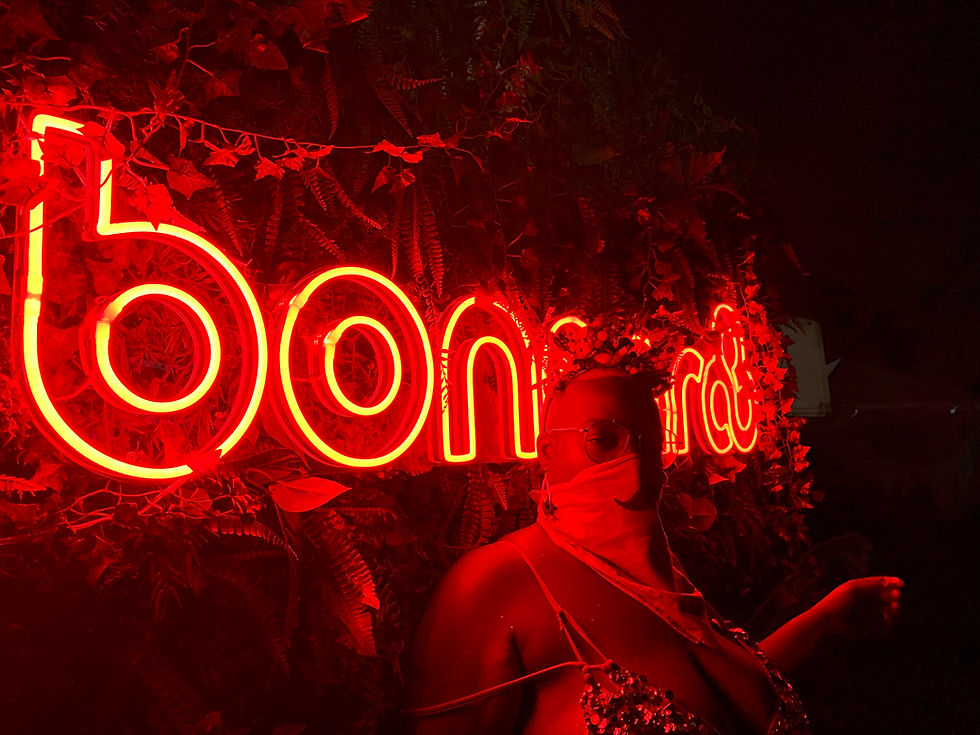
I was working with an artist at the time and ended up at Bonnaroo as a VIP, for free.
And one of the performances I was most excited for was Solange.
This was her first performance back stateside after When I Get Home had dropped. She had already taken the work outside of the U.S., and I didn’t question that then—but I do now.
At the time, it all felt aligned.
Like I was stepping into something I had built.
But looking back, everything—including me—was wrapped in a deep shell of performance.
So it makes sense that I heard that album as revolutionary.

I hadn’t broken open yet.
I hadn’t entered the body in a way that disrupts, that fractures, that forces something to actually change.
I was still inside a version of myself that needed to appear whole.
And that is exactly where When I Get Home lives.
When I think about the album now, I don’t hear transformation.
I hear maintenance.
Everything is smooth. Everything is controlled.
Nothing breaks.
There is movement, but it loops.
There is identity, but it doesn’t get tested.
There is embodiment, but no risk. And there is no embodiment without risk.
So what is being performed is not transformation.
It is the appearance of being settled inside the self.
And that matters, because settling is not the same as becoming.

The album lives in still water.
Regulated. Held. Contained.
Even when it moves, it doesn’t leave itself.
It circles. It affirms. It repeats.
But it never crosses.
There is no disruption.
No rupture.
No point where the body loses control long enough to reorganize into something else.
It teaches maintenance within a system. Not how to break it.
And that maintenance extends beyond the album.
Calm is prioritized over truth.
And we are living inside a larger Black cultural moment where “protecting your peace” has become the directive above all else. But peace, when it is used this way, can become another form of containment.
Because if truth disrupts, and disruption is avoided, then what is being protected is not peace—it is stability inside a system that has not been broken.
So the question becomes:
what is the cost of calm when truth is held back to preserve it?
And that is where the fracture begins.
Because even the grounding is not real grounding.

Black bodies are of the earth. We are earth.
But grounding here is still tied to commodity.
It is visual. It is referenced.
But it is not contact.
Grounding is not floating in a Cadillac that runs on fossil fuels.
Grounding is letting the earth cover you.
It is dirt. Weight. Mess. Time.
So the earth becomes symbol instead of material.
A gesture instead of a relationship.
And then the whole thing sits inside what feels like a museum.
Black life on white walls.
Spaced out. Slowed down. Framed.
On display for everyone.
Nothing left sacred.
Even the tools that once carried us toward freedom get pulled into this system.
Call and response is not just aesthetic.
It is not just rhythm.
It is not just participation.
It is a survival technology.
A method of communication.
A way to signal, to warn, to guide, to move without being seen.
It helped enslaved people find each other, stay safe, and in some cases, get free.
And now it loops inside tracks as repetition.
Flattened into vibe.
Turned into something consumable.
What once carried risk now circulates without consequence.
And that matters.
Because when the function is removed and only the form remains, something is lost.
It is powerful, yes.
But it is powerful in the way that something becomes powerful when it is made legible for consumption.
And I know that feeling because I have lived inside it.
When I Get Home sounds like who I was before diagnosis.
A version of myself trying to regulate.
Trying to hold it together.
Trying to be coherent inside a system that required me to be normal.
And that’s the part I struggle to reconcile.
The delusion of normalcy.
The forcing of it.
The dilution of self passed down, generation to generation.
So when I hear this album now, I don’t just hear Solange.
I hear a state of being I had to survive.
And I am no longer interested in maintaining that state.
I am not interested in coherence that comes from control.
I am not interested in calm that requires silence.
I am interested in rupture.
In what happens when the body breaks pattern.
When the signal changes.
When something real is forced to emerge.
Because nothing changes in a loop.
And I am not trying to return to myself.
I am trying to become someone I have not been allowed to be.

◉)) When I Get Home, Nothing Breaks: The Museum of Black Interior


Comments