


✺ The Body Electric — Movement Is How Pressure Remembers Where to Go

The loop wasn’t only cognitive.
The loop was biomechanical.
I Move Tings

Movement, Rhythm & Embodiment
I Move Tings explores movement as a language of the body—how rhythm, slowness, and repetition become medicine.
This practice centers moving in ways that sustain rather than extract, listening for the body’s own tempo.
Movement here is not performance; it is relationship.

✺ The Body Electric — Movement Is How Pressure Remembers Where to Go

I used to say I had to put my OCD brain to work.
I don’t think that’s actually true anymore.
Or maybe it’s only half true.
Because the more I understand my body, the more I realize I don’t simply have to put my brain to work.
I have to put my body to work.
Those are two completely different things.
⸻
We’ve been taught to believe thinking happens in the brain.
Planning happens in the brain.
Memory happens in the brain.
Healing happens in the brain.
Problem solving happens in the brain.
Everything gets pushed upward.
Into the head.
Then we wonder why everybody feels trapped there.
⸻
I don’t think we’ve been forced into our brains.
I think we’ve been forced into cognition without embodiment.
That’s different.
Thinking isn’t the problem.
Disembodied thinking is.
Because eventually the brain starts trying to do jobs it was never designed to do.
It starts trying to digest grief.

Digest fear.
Digest conflict.
Digest sensory overload.
Digest injustice.
Digest racism.
Digest capitalism.
Digest loneliness.
Digest pressure.
And it can’t.
Because digestion has always belonged to the body.
⸻
That realization completely changed how I understand my OCD.

One step teaches the next. 
Cadence before confidence. 
Learning what steady actually feels like. 
Pressure becoming circulation. Returning is part of the practice.
For years I thought my loops were simply thoughts.
Now I think some of them are unfinished movement.

Pressure that never found a direction.
Force that never found a body.
Questions that never found action.
Relationships that never found endings.
Grief that never found tears.
Energy that never found somewhere to go.
The loop wasn’t only cognitive.
The loop was biomechanical.
⸻
That’s why kettlebells changed my life.
Not because they’re magical.
Not because everybody should lift weights.
Because they ask my body to complete something.


Load.
Brace.
Hinge.
Drive.
Release.
Again.
Again.
Again.

Every repetition teaches my nervous system something I was never taught growing up.
Pressure doesn’t have to stay here.
It can move.

⸻
That’s also why I hated basketball.
Hated track.
Except for shot put.
But I slick ran a 5k earlier this year.
Just for me.
Because resistance has always made sense to my body.
Even before I had language for why.
Resistance gives pressure somewhere to organize itself.
Then somewhere to go.
I didn’t know I was looking for regulation.
I thought I was just looking for movement.
Turns out they were the same thing.
⸻
Looking back at my father has changed this conversation too.
He loved football.
He lifted weights.
His body knew resistance.
Then football disappeared.
The movement disappeared.
The body didn’t.

He kept eating like a football player.
He stopped moving like one.
I don’t think food was the problem.
I think food became the only remaining ritual his body recognized.
The pressure never stopped.
The movement did.
⸻
That makes me wonder how many things we’ve mislabeled.
How much “lack of discipline” is actually unfinished movement.
How much “laziness” is actually nervous system exhaustion.
How much “overthinking” is pressure with nowhere to go.
How much inflammation is a body holding on because it has forgotten how to release.
Those aren’t medical conclusions.
They’re questions.
Questions my own body keeps asking me.
Questions I think more of us deserve permission to ask.
⸻
The more I pay attention, the more I realize the Cosmos has always been trying to answer the same question.
They all ask:
Where does pressure go?
How does it circulate?
What happens when circulation stops?
What practices help it return?
How does the body return to itself over and over again?
⸻
Maybe embodiment isn’t about becoming calmer.
Maybe embodiment is remembering that the body was designed for circulation.
Not accumulation.
Not endless containment.
Circulation.
Pressure doesn’t disappear.
It moves.

Different ground. Same practice. 
Movement changes when the world gets bigger. 
Pressure still remembers.
Movement is how pressure remembers where to go.
Cosmos Watershed | |
Companion | The Life That Was Interrupted |
Origin | Emerged directly from reflecting on the first anniversary of an emergency appendectomy and mapping surgery, astrology, kettlebells, OCD, and movement into one embodied framework. |
Expansion | Introduces biomechanical cognition, pressure as circulation, and movement as the body’s completion of unfinished processes. Establishes the conceptual bridge toward Embodiment Diagram Version 2. |
Application | Offers a framework for understanding movement practices, kettlebells, cooking, art-making, gardening, writing, laughter, and rest as different forms of embodied pressure release rather than productivity or exercise alone. |
Lineage | Connects father’s football and weightlifting, mother’s containment, grandmother’s carrying, Kiing’s regulation through movement, and the evolution of the Six Waters into an ecology of circulation. |
Counter Currents | Colonial productivity, sedentary technology culture, disembodied cognition, wellness culture that treats exercise as performance, medical reductionism, forced stillness, and endless accumulation without release. |
A lil Post Script
Literally

We’ve been growing together and we remember. 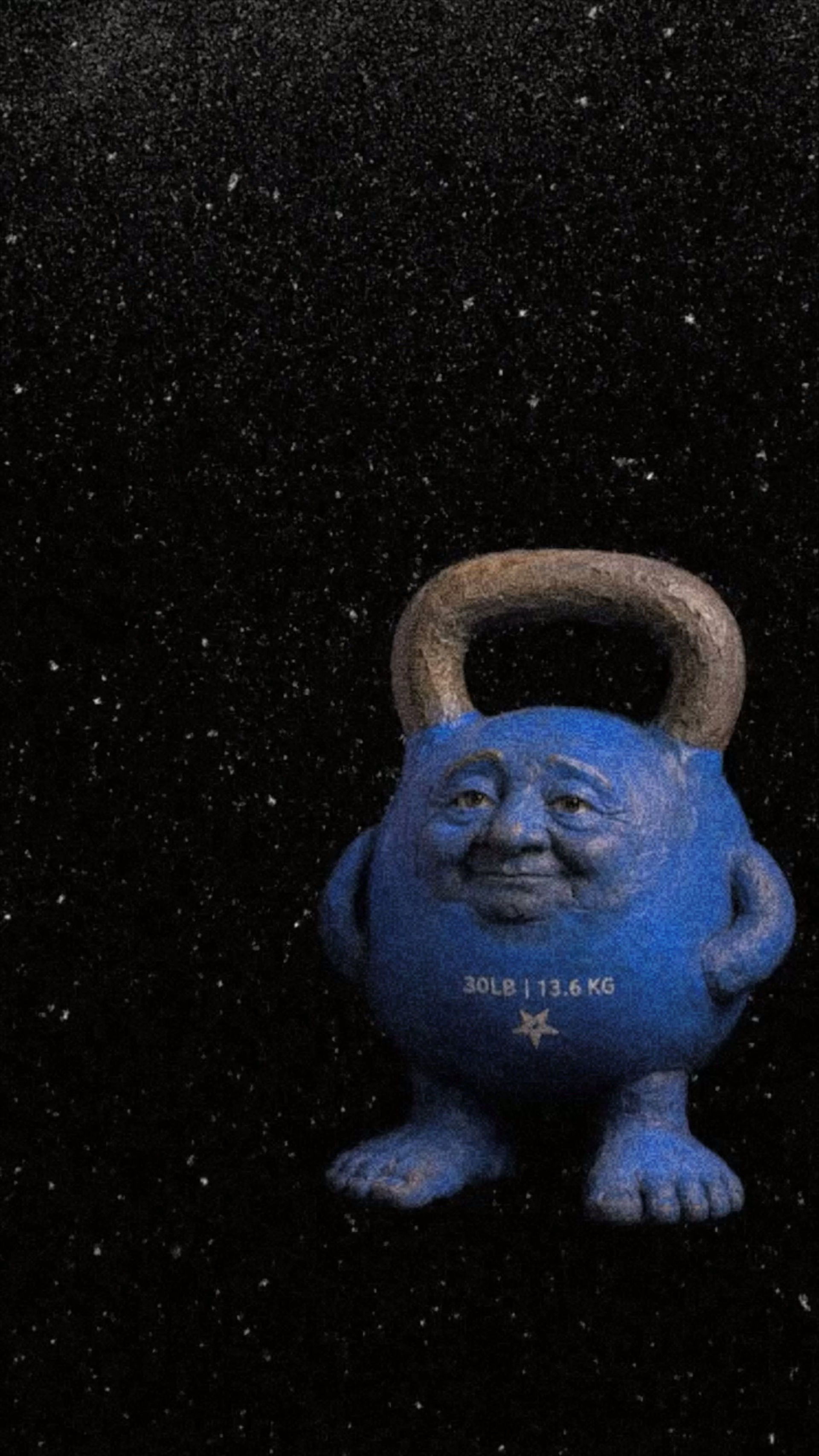
Some conversations happen under tension. 
Heavy doesn’t always mean hard. 
The work changed us both. 
Some friendships are built one repetition at a time.
THE ELDERS
(The 20 lb kettlebell speaks.)
Do you remember?
They couldn’t pick us up without wondering.
Without guarding.
Without listening to the scar before listening to themselves.
We waited.
Not because they were weak.
Because healing has its own rhythm.
(The 30 lb kettlebell replies.)
I remember.
They looked at me with longing.
Not envy.
Not frustration.
Respect.
They knew I wasn’t ready.
And I knew they weren’t either.
So I stayed patient.
20 lb:
People think recovery is dramatic.
Most of it was ordinary.
One careful lift.
One walk.
One meal.
One nap.
One more tomorrow.
30 lb:
Strength is suspicious of urgency.
It prefers repetition.
20 lb:
Today marks one year.
One full turn around the sun since the body was opened.
Look at them now.
Standing.
Breathing.
Choosing us again.
30 lb:
Notice something.
The scar isn’t gone.
Neither is the memory.
Neither should disappear.
Scars are maps.
Not mistakes.
20 lb:
There were days they apologized for resting.
30 lb:
Now they understand.
Rest wasn’t interrupting the work.
Rest was the work.
20 lb:
We’ve watched the plants grow beside us.
We’ve watched essays fill the room.
We’ve watched tears hit this mat.
We’ve watched laughter return.
We’ve watched mornings become less frightening.
30 lb:
People think we build muscle.
Sometimes.
Mostly…
We build trust.
20 lb:
A year ago the body asked,
“Can I survive this?”
30 lb:
Today it asks,
“What can we create because we survived?”
20 lb:
Do you think they’ll ever stop coming back?
30 lb:
I hope not.
Not because they owe us anything.
Because every time they return,
they remember that healing was never a destination.
It was a relationship.
And relationships are built one lift at a time.
Together:
Happy anniversary.
Thank you for carrying us.
As much as we have carried you.
✺ The Body Electric — Movement Is How Pressure Remembers Where to Go


Comments