


◉≋ Natural Hair Is Not the Same as Free: Returning to Afro Hair

Updated: Aug 28
I moved through relaxers, cosmetology, natural-hair marketing and Black Beauty School before I understood that my Afro was never the problem. It was terrain. It was antenna. It was speaking.

Afro Tings
Afro Tings offers hair care and theory that heals, grounds, and cultivates awareness in the face of colonial harm.
This terrain centers tending hair as embodied practice—holding texture, time, and care as sites of relationship rather than performance.
Here, hair care is not aesthetic alone; it is practice shaped by memory, attention, and resistance to extraction.

The Album 🎵 Dorothy Ashby, “Afro-Harping” - I Hear Tings
◉≋ Natural Hair Is Not the Same as Free: Returning to Afro Hair

Afro hair is not a problem waiting for the right product, practitioner or rule to solve it.
It is an individual terrain.
Layered.
Responsive.
Ecological.
Alive.
You cannot understand it from a distance. You cannot ignore it until it becomes inconvenient and then suddenly expect it to explain itself to you. You have to enter it. Observe it. Touch it. Live with it long enough for its patterns to become legible.
Not with correction.
With relationship.
Before the License, There Was the Terrain

My maternal grandmother was a licensed cosmetologist. My mother was adamant that I would not relax my hair before I turned eighteen.
Growing up in the 1990s, that was not an easy boundary to live inside. Straight hair was everywhere. It was not simply a style. It was expectation. Acceptability. Femininity. Maturity. Assimilation. It was supposed to make a Black body easier to read and, supposedly, easier to receive.
But I was not allowed to step fully into that structure yet.
That did not mean I spent eighteen years sitting around untouched, waiting for somebody else to teach me my hair. I started pressing my own hair in third or fourth grade. I was learning heat, tension, timing and the limits of my own hands before I had language for any of it. I was trying salons. I was trying styles. I was watching my grandmother. I was living inside the contradictions of Black hair care before I understood that they were contradictions.
I was learning my terrain because I had no choice but to remain in relationship with it.
At the time, I could not fully understand what my mother’s boundary was giving me. I knew what I thought I was being denied. I could see what other Black children were permitted to do with their hair and what kind of social access that seemed to give them. What I could not yet see was that remaining with my unaltered texture was keeping me close enough to learn how my hair moved before culture taught me to stop listening.

Then I turned eighteen and stepped onto the treadmill anyway.
Of course I did.
Colonialism does not need to knock on the door and announce itself. By eighteen, culture had already made the argument. It had already told me what straightened hair could supposedly make possible. It had already taught me that assimilation could be mistaken for choice when the consequences for refusing it were made clear enough.
So I relaxed my hair.
I did my own hair. I went to salons. I tried to move between what I had learned through my own hands and what the beauty industry insisted somebody else knew better than I did.
That movement matters because my knowledge of Afro hair did not begin in cosmetology school. Cosmetology school interrupted knowledge that was already forming.

The License Was a Landscape, Not the Cosmos

I received my cosmetology license in 2014 because I believed I was entering a deeper framework for understanding hair.
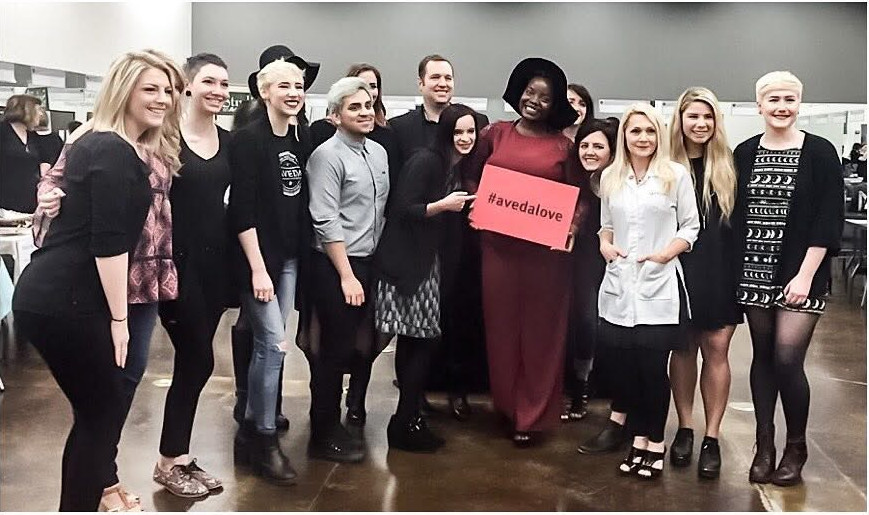
I was not trying to force Black bodies into another structure. I wanted to help people with Afro hair understand their hair and bodies more completely. I thought technical education would give me the language and science to support what I already knew through experience.
Instead, I got wrapped back up in assimilation.

Cosmetology could not teach me the framework I was looking for because cosmetology was not built to hold it. The entire structure is licensed by the state, and the state has never been neutral in its relationship to the Black body.
The state knows how to regulate Black bodies.
It knows how to extract from Black bodies.

It knows how to turn Black bodies into labor, data, profit, proof, spectacle and commodity.
That does not suddenly disappear because the room has shampoo bowls and styling chairs.
A practice accountable to the state cannot automatically be assumed to be accountable to Black embodiment. Cosmetology’s dominant grammar remains European: control, alteration, consistency, presentation and the authority of the professional over the person whose body is being handled.

Even when the cosmetologist is Black.
Even when the salon is Black-owned.
Even when every product in the room has a Black face on it.
Black ownership does not automatically create a decolonized relationship to Black hair.
And honesty requires saying that many Black people were pushed into beauty labor because it was among the work made available to us. That does not mean every person entering the industry was given the time, resources, care or freedom to develop a deep relationship with Afro hair and Afro bodies.
That is not an indictment of people who needed to survive.
It is an indictment of the conditions that turned survival into an industry and then allowed that industry to treat its inherited misinformation as sacred.
Once misinformation becomes group culture, questioning it can be treated as betrayal.
Care Cannot Require Dependence

I eventually had to look honestly at my own client practice.
My clients were not always leaving with a deeper ability to read their bodies. Some were becoming more dependent on my labor. My hands were becoming the answer to terrain they lived inside every day.
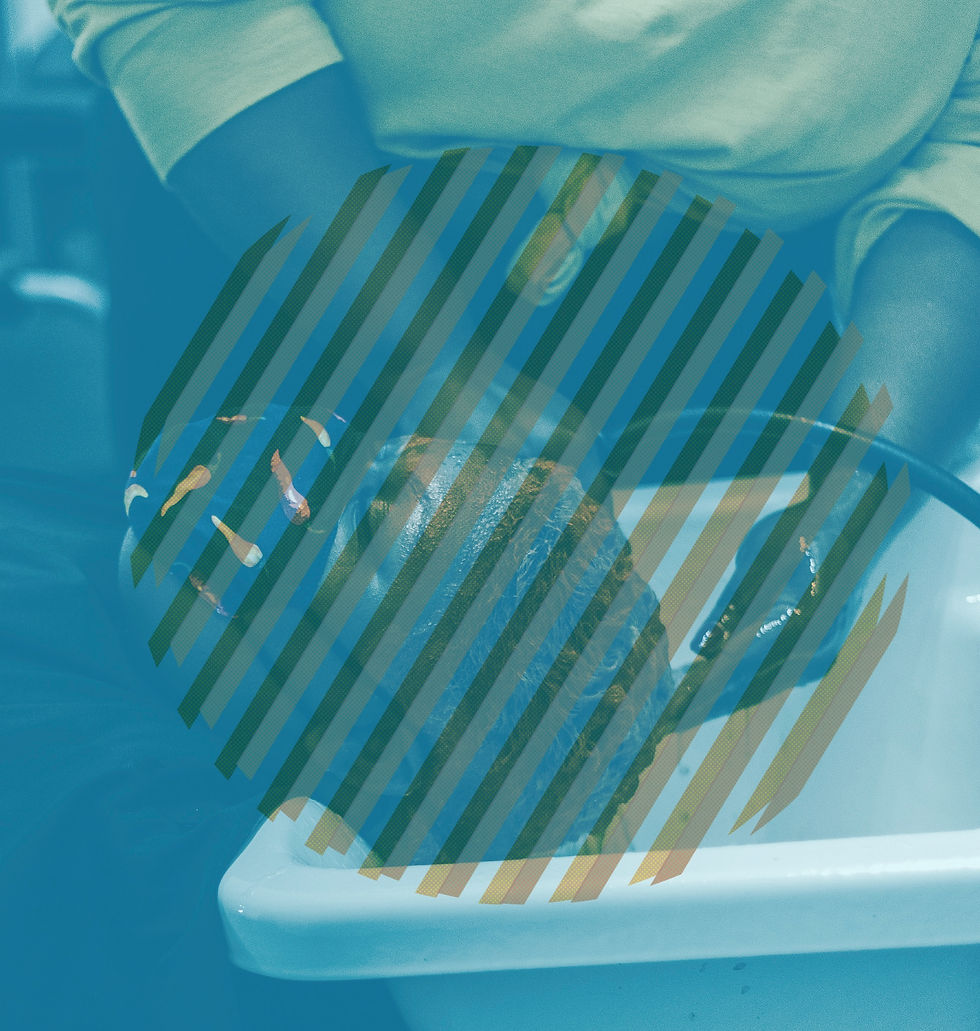
That was not what I wanted.
I did not want to become another person presumed to know somebody else’s body better than they knew themselves. I did not want care to mean that somebody needed permanent access to me in order to remain in relationship with their own head.
That is weird.
It is weird to become entitled to another person’s labor as the solution to your own body. It is also weird for a practitioner to build an identity around being the person without whom everybody else’s hair will supposedly fall apart.
Care that creates permanent dependence is not the kind of care I intended to practice.
Social media made that even clearer. Afro hair was being co-opted again—this time through capitalism, influencer culture and hyperfemininity. Stylists connected themselves to brands whose primary interest in the Black body was commodity, then constructed elaborate stories around the partnership.
Afro hair was still being described as inherently unclean.
Natural-hair “success” was still being attached to expensive products that spent no time in R&D around Black bodies actually. As I remember being a part of marketing research group around Afro hair. It was all a gimmick and they got my knowledge for mere pennies.
Poorly formulated products were being sold through intimacy, aspiration and anti-Black fear.
The stylist was selling the product. The product was selling the stylist. Both were selling the idea that your body remained one purchase or appointment away from finally becoming acceptable.
So I stepped away.
A Is for Afro. A Is for Antenna.

One of the biggest lies people with Afro hair continue to tell themselves—while living with hair that literally reaches away from the body and defies gravity—is that their hair has nothing to do with their mental health.
It does.
Hair is not floating above the nervous system as decoration. The scalp and hair follicles are innervated through the peripheral nervous system and connected to autonomic nervous-system activity—the systems involved in sensation, pain, circulation, arousal, regulation and the body’s response to its environment. The follicle is not separate from what the brain and body are experiencing. It is living within that communication network.
The Afro is antenna because it receives, responds and reveals. Multiple antennas crowded into one scalp.

High Density
Fine
We spend years trying to grow our hair longer while refusing to tend to what the body may be surviving underneath it. We buy another salon product, swallow another growth vitamin and rebuild another regimen without asking what our nervous system has been carrying. We live with painful scalps, extreme sensitivity, tightness, burning and discomfort during care, then treat those signals as proof that our hair is difficult or that we simply have not found the correct product yet. The sensation is real whether or not somebody else can see its source.
A product cannot resolve a body that is being forced to brace itself.
A is for Alopecia and Black women and queer folx are suffering deeply.
Yes it is a disorder, yes there are other health implication and deeper nuance, but it is also connected to deeper lineages of unmanaged stress and trauma in the Afro hair lineage.
If your Afro hair is not thriving, the answer may not be another bottle. The terrain may be responding to exhaustion, grief, stress, sensory overwhelm, illness, medication, environmental change or the daily violence of forcing yourself into forms your body cannot sustain. It may also be responding to the shame of not knowing how to care for your hair because nobody was given the time to teach you without ridicule, punishment or profit entering the room.

That does not mean every change in hair growth is caused by mental health. It means the brain, autonomic nervous system, peripheral nervous system, scalp, follicle, immune system and environment are not separate territories. What happens within one can move through the others. Afro hair cannot be cared for as though the body beneath it is irrelevant.
And I need to be precise here: recognizing yourself as the primary knower of your terrain does not mean you must always have the physical, mental, sensory or emotional capacity to do your own hair.
Some of us do not have the spoons.
Some bodies cannot hold their arms above their heads for hours. Some hands cannot grip, braid, part or detangle. Some nervous systems cannot sustain the sound, repetition, pain or length of the process. Some people are exhausted before the tending even begins.
That is not failure.
That is information.
Learning your terrain includes learning when you need another set of hands.

That recognition gives us an opening to return to community with Afro hair—not through entitlement to another person’s labor, but through relationship, consent and reciprocity. It brings us back to the kitchen beautician. Back to sitting between somebody’s knees. Back to water, food, conversation, quiet, laughter, pauses and hands that know when to stop. Back to Wata(ring): the intentional circulation of care between bodies that understand tending as an intimate exchange.
We do not need to recreate the salon inside the home. We need to remember forms of care that existed before every touch had to become a service, every skill had to become a brand and every relationship had to become a transaction.
We keep copying White systems because we have been taught that proximity will prove we are equally clean, equally professional, equally disciplined and equally worthy. That proof is never coming. The test was designed to keep moving.
Why not build care around the bodies we actually inhabit? Why not let capacity determine the rhythm? Why not create small, private and intentional networks where Afro hair can be tended without performance, urgency or punishment?
A is for Afro.
A is for Antenna.
What is happening in the hair is never only happening in the hair.
The Service May Be Divided by the Binary. The Terrain Is Not.

Stepping away also made the binary structure of hair service impossible to ignore.
Afro hair is Afro hair.
It does not become masculine when it enters a barbershop. It does not become feminine when it enters a salon.
Binary gender does not change the terrain.
It changes who is permitted to touch it. It changes what services are offered, how much time is considered reasonable, what price is demanded and what the finished body is expected to communicate.

Barbering has been compressed into a colonial timeframe: move faster, serve more bodies, charge more money and call speed expertise—even when the hair and scalp have not received the tending they require.
Salon culture can reproduce a different form of harm. Overexposure, intrusion, gossip, hierarchy and dysregulated group energy become part of the price a person is expected to pay for care.
Meanwhile, everybody’s hair is being undertended.
Afro hair is energy work.
Touching somebody’s scalp is not nothing. Entering their hair is not nothing. Moving around their head, changing their appearance and being given access to their body is an exchange between people.
That exchange requires consent, attention, regulation, boundaries and reciprocity. If it is out of balance, the style may be technically complete, but the care cannot be sustainable.
The problem is not simply where Afro hair is being done. It is the social architecture surrounding the doing.
No amount of technical skill can compensate for a relationship that teaches the body to brace itself.
The Afro ABCs refuse the idea that hair belongs to a binary before it belongs to the body.
The terrain leads.
The person living within it remains the primary knower.

Natural Is Not the Same as Free

Returning to full communication with my own body made the terrain visible again.
I began allowing my Afro hair to lead instead of approaching it through the constant noise of the natural-hair marketplace.
“Natural” had become a product category rather than a path toward freedom.
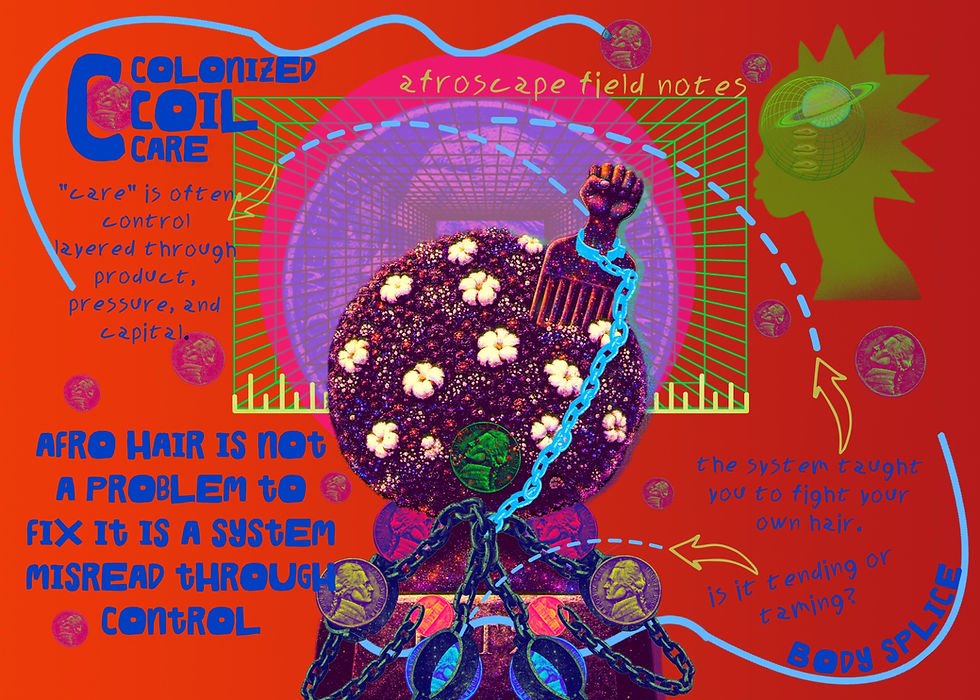
Product-junkie culture, endless routines and constant intervention could create the feeling of exploration while keeping the body too distracted to be heard. You could spend years buying products, watching tutorials, changing methods and arguing over ingredients without ever becoming more capable of reading your own hair.
Afro hair requires deep tending.
But deep tending is not the same as constant doing.
One thing that became clear through my practice is that weekly washing is not a universal requirement of Afro hair. A roughly monthly wash cycle has become a grounding rhythm for me and should be a starting point for others.
Some scalp conditions and particular body needs may call for ten to fourteen days.
That is not a new commandment meant to replace the old one.
But weekly commandment should have never existed.
I am not building another rulebook.
Every Afro body is a different terrain, and every terrain has to reveal its own requirements.
There Is No Product List

You will not find a list of recommended brands here.
Brands change.
Formulas change, but not really.
Most products are riffs on the same recipe that suit the system it supports financially.
Products disappear.
No brand can replace understanding what an ingredient does, what each layer contributes and what your particular terrain requires.
Long-term observation has brought me to an elemental moisture architecture: water, glycerin, gel, curl mousse and curl cream. Along with weekly re-application to build of up layers and weight the hair into gravity.
I am sticking to that.
Glycerin is the moisture anchor. It appears in many products marketed for Afro and curly hair, but appearing on an ingredient list is not the same as being present in the amount Afro hair actually requires.
The industry knows how to formulate specialized products. New technology in professional backbar systems for textured hair make that clear. Yet that depth of formulation is rarely made broadly accessible over the counter.
That exclusion is a choice.
Creating products with substantially more glycerin would require recognizing Afro hair as a distinct terrain rather than stretching one generalized formula across every curl and then blaming Afro hair when the product cannot sustain it.
This is how product conversation becomes another distraction. One ingredient is extracted from the whole and declared miraculous or dangerous while the architecture surrounding it disappears.

Moisture is relational.
Moisture is atmospherical.
Water, glycerin, gel, mousse and cream have to be built together. Their order, amount and interaction matter more than the promise printed on the bottle.
Safety matters. We already know what relaxers and other chemical practices have done to Black bodies. But refusing that harm cannot push us so far into clean-girl territory that we begin damaging our hair in reverse.
Black people will never prove ourselves sufficiently clean or pure within colonial White society. That is a test designed for us to fail forever.
Removing every functional ingredient in an attempt to perform purity does not liberate the body if the hair can no longer retain moisture.
Product is also only one part of the architecture.
Afro hair must be allowed to remain clumped and in close community with one another.
The coil is not failing when it gathers. Clumping helps the terrain hold moisture, structure and protection. Constantly separating the hair so that it can remain loose and free-flowing is another attempt to make Afro hair perform a freedom defined through proximity to White hair.

Protective styling is not synonymous with adding external hair.
Protection is the condition being created.
It means allowing Afro hair to remain clumped, low-manipulation and protected from one cycle to the next so growth can be retained and healthy coils can be sustained.
The brand is not the knowing.
The relationship is.
The Joke Is the Curriculum

A joke is one of the fastest ways a group can teach its rules without admitting that it is teaching.
That is why I do not treat the humor and sarcasm surrounding Afro hair as harmless.
When people move around the internet laughing at someone for not washing their hair every week, making Eco Styler the punchline or treating the “ghetto” beauty supply store as evidence that someone has failed at natural hair, the joke is doing educational work.
It is teaching people which products make them respectable.
Which routines make them clean.
Which language makes them informed.
Which bodies deserve to become the example everyone gathers around to laugh at.
And most of the time, the people doing the laughing do not actually possess the depth of relationship they are performing. The sarcasm becomes cover for the lack already present. It allows somebody to sound certain without having observed their own terrain long enough to know what is true.
People went across the internet shaming anyone who did not wash their Afro hair weekly. Meanwhile, weekly washing was damaging my hair. It kept me inside a cycle of stripping, rebuilding, manipulating and disturbing the terrain before it had enough time to settle. The rule was repeated so loudly that people stopped asking who created it, what kind of hair it was developed around or what the constant disruption was actually doing to Afro hair.

The same thing happened with Eco Styler.
I use Eco Styler regularly. I purposefully returned to it because I wanted to understand what the gel was doing, what it was not doing and what I had previously been missing. What was missing was not another expensive curl product. It was glycerin. Once the moisture architecture underneath the gel changed, my relationship with the gel changed too.
But that kind of knowing requires someone to move beyond the joke. It requires curiosity. It requires returning to the supposedly embarrassing product, place or practice and asking what it actually does instead of using it to establish social distance between yourself and other Black people.
There is nothing liberatory about humiliating someone because they buy their products from the beauty supply store, use an inexpensive gel, cannot perform an elaborate routine or do not have the time, money, energy or spoons required to make their hair legible to the natural-hair internet.
Afro hair and Black bodies have been made synonymous with the punchline for far too long. Our coils, scalps, bonnets, edges, products, salons, barbershops and private practices of tending become content for strangers who need somebody beneath them so they can feel properly placed inside the group.

I do not find that funny.
I do not find bullying funny because it has been dressed up as education. I do not find humiliation funny because someone added a laughing reaction, a trending sound or a sarcastic voice-over. And I do not believe that joining the clique producing the joke gives anyone the belonging they are actually looking for.
Belonging is a big motherfucker.
The desire for it will have people enforcing the same colonial standards they claim to be escaping. It will have people confusing proximity with protection, cruelty with knowledge and group agreement with truth. It will have Black people shaming one another toward assimilation and calling that community.
But if your belonging requires another Black body to become the joke, you have not found belonging.
You have found another treadmill.
The Coil Is Not a Grade

Curl typing is not hair science.
It does not exist as a biological truth. It is a classification system repeated so often that marketing and state-authorized cosmetology made it feel anatomical.
It came through celebrity hairstyling—not trichology, ecology or sustained study of Afro bodies. Yet people have driven the numbered and lettered grid into the ground as if it reveals something scientifically true about the hair.

The grid is not neutral.
It is a hierarchy.
Straight hair is placed first. Afro hair is placed last. The closer hair appears to Whiteness, the higher, softer and more desirable it is presumed to be. The more tightly it spirals, contracts or refuses to display curl in the market-approved way, the lower it is placed.
I understand why 4C became a site of belonging. People who had been given no affirming language for their coils found one another inside that category.
That community is real.
The category is not.
It is heartbreaking to watch Black people build belonging inside the bottom compartment of a hierarchy designed to diminish the hair it names.
The system teaches people to believe their hair has no curl pattern because its geometry cannot always be seen from the outside. It asks Afro hair to prove that it curls by becoming visibly legible to standards created through proximity to White hair.
The inability to see a pattern does not mean the pattern is absent.
Afro hair is circular, spiral, recursive and fractal. It holds pattern inside pattern. It contracts and expands. It repeats, returns and connects.
Water, glycerin, clumping, movement, atmosphere, tightness of coil, weight and touch may change what becomes visible, but the underlying geometry does not need a grade in order to exist.
The question is not, “What curl type am I?”
The questions are:
How does this terrain receive water?
How does it hold moisture?
How does it gather?
How does it respond to touch, time, movement, atmosphere and weight?
What relationship allows it to remain whole?
Afro hair does not need a type.
It needs to be known.
Afro Color Theory and the Copper Corridor

Color is another place where cosmetology could not give me the framework I needed.
I love coloring Afro hair. I am not impacted my modernity just like anyone else.
I also know now that there is no foundational color education built specifically from the terrain of Afro hair. What exists is largely color theory developed around non-Black hair and then extended toward Afro hair as if all hair is interchangeable.
All hair is not the same.

People love to say hair is fabric as though that settles the conversation. But fabric itself requires specific care.
Silk is not denim.
Wool is not polyester.
A handwoven textile is not ready-to-wear fast fashion.
Afro Hair stands alone in its uniqueness.
Fast fashion, plastic fibers and disposable clothing have already destroyed much of our shared knowledge about what different fabrics require.
Cosmetology has done something similar to hair. It flattened distinct terrains into one generalized material and then organized the service around how many clients can be moved through a salon in a week.
If that system is already incomplete for non-Black hair, then Afro hair is being dragged through an unfinished map.
This is why Afro Color Theory and the Copper Corridor are central to the book.
When most Afro hair is lifted, the natural remaining pigment moves through red and orange before reaching a brighter state. That is not an inconvenience to be blasted through. That is the terrain communicating where it is.
The Copper Corridor begins there.

Lightener cannot be the beginning of the conversation. It cannot even enter the conversation until somebody has developed a real understanding of Afro hair and then developed an understanding of copper-colored Afro hair through levels five to seven.
Generally, after providing color services for more than ten years, I would not recommend color to most people.
That is not because Afro hair cannot be colored. It is because people are often dishonest with themselves about how well they understand and sustain their hair before color. Once the terrain changes, the care has to change with it. Many people want the visual transformation without accepting the new relationship that transformation requires.
Then the stylist gets blamed for a relationship the client never intended to maintain.
This is why I am moving toward teaching people how to color their own hair.
If you understand your terrain, the actual cost, and the science of color, your own hands need to participate in that responsibility. If you cannot or do not want to enter that level of relationship, that knowing may move you away from asking somebody else to do it for you.

That is still useful information.
If I ever return to taking clients, it will be privately and relationally. The work will have to build somebody’s understanding of their own body over time.
I will never again lighten somebody’s hair without moving through the Copper Corridor first.
And I will not do full-head blonding on longer Afro hair again. The only circumstance in which I can imagine doing it is on very short TWA-length hair that is being cut regularly.
I did not arrive at this position through theory alone.
In 2022, after deciding to get sober, I shaved my head completely. That became the beginning of a new period of experimentation with my hair. I had to take what I learned in cosmetology school apart and look at it again through a decolonized lens.
I began with high-lift color. Once my hair reached a particular length, I used lightener in a limited area toward the back. Even with the high-quality products available to me, that small experiment showed me how poorly routine lightening relates to Afro hair.
I kept observing.
I allowed my hair to grow. I maintained copper primarily through high-lift color. I increased glycerin, reduced the frequency of washing and simplified the amount of product I was consuming.
This one is important. Let me turn on caps.
I NEVER DO AFRO HAIR COLOR WITHOUT A BOND BUILDER.
NEVERRRRRRRRRRRR.
This one actually isn't up for discussion I have ALWAYS used a separate bond builder. Along with a lighteners with built in bond builder - and there is only one I recommend for Afro hair.
My hair began thriving.
I could retain length. I could afford the amount of product my hair actually needed. I could tend it without the routine burning through both my budget and my capacity to care.
A specialized lightening session once every year, year and a half or perhaps longer—with a low-volume developer mixture—has allowed me to extend the color without repeatedly stripping the terrain.
My hair told me what cosmetology school did not:
Routine lightener is not meant for Afro hair in the way the industry teaches and markets it.
That is not fear.
That is observation.
Black Beauty School Was Not a Flex

I also need to speak directly about Black Beauty School.
Black Beauty School was taught inside White salon spaces. That was never the goal.
There were people who acted as though I had deliberately chosen White salons over Black salons, or that teaching in those rooms was somehow a flex.
It was not.
I wanted Black Beauty School inside Black and Afro salon spaces. But wanting that did not make those spaces available to me.
Many Black salons are not structured to bring in education at all. Beyond that, misinformation within the Black salon industry is often treated as foundational knowledge. When somebody attempts to question that foundation—not just add a trendy technique, but say the foundation itself is wrong—they can be treated horribly.

I already knew that from working in Black salon spaces and encountering some of the larger names in the Black salon industry.
Some of those people were horrible to their communities.
I mean that.
Black space does not automatically mean safe space. Black ownership does not prevent ego, extraction, manipulation or harm.

Salon spaces across race can become tiny kingdoms where the person controlling the money also controls the rules, the story and whose reality is permitted to count. People lie. They rewrite events. They weaponize access. They decide that their power over a room gives them power over everybody inside it.
It is colonialism made small enough to fit inside a salon.
Meanwhile, Siir and I were putting in real work.
Black Beauty School was self-funded. We drove from coast to coast with very little support. I entered cities and connected directly with Black people living there because I was there for them. We sat with people in intimate spaces. We shared ourselves. We tried to shift something.
And many of the salon owners inviting us in were trying to figure out how to get more Black bodies through their doors so they could make more money from them.
That was it.
They could put up Black Lives Matter signs while continuing to treat actual Black people as commodity.
I wish Black Lives Matter had never become what it became.
We speed through everything in this place. We turn language into branding before we have practiced its meaning. We turn liberation into a campaign, Blackness into a market and urgency into permission to move over the same Black bodies everybody claims to be protecting.

Ask Innersense about the spy they sent to one of my classes who didn't identify themselves and then tried to co-opt the class with tears and misinformation.
Black people have been sped over for hundreds of years.
This time, I got caught in the machinery.
I was lied to. I was manipulated. My life was placed in real danger. We lost our car after the financial expenditure of trying to keep the work moving. I entered full autistic burnout.
The people we thought were community did not care.
And I had entered every one of those spaces with the utmost intention and care. That was not what was extended back to me.
Black Beauty School was not a flex.
It was labor.
It was risk.

It was an attempt to build a bridge toward Black people that kept being intercepted by people who wanted access to Black bodies without relationship to them.
This is part of why I am writing the book.
The book does not require me to enter somebody’s salon kingdom. You do not have to come sit in my chair. I do not have to chase you, convince you or negotiate with binary-ass salon politics to make the work available.
The book can be purchased by anybody.
It can travel where I cannot.
It can sit with somebody for longer than an appointment.
It can be returned to after the first reading.
It can be passed around and passed down.
Twenty-Six Splices Into the Terrain

I am still grateful for what Black Beauty School created.
Because Black Beauty School became Litmus.
Litmus opened another part of the terrain.
And eventually, the Afro ABCs arrived.
The seed for Afro ABCs was planted over 10 years ago. There have been other variations that were left unfinished, and a test shoot when the idea first surfaced.
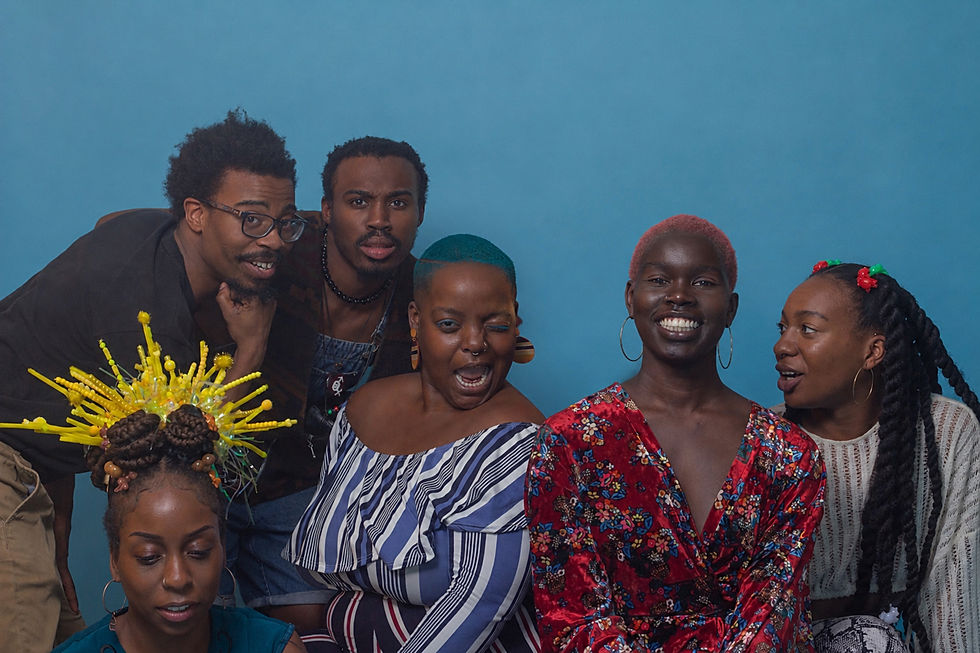
That knowing is rotational. It is Mycelial Sankofa practiced through ecological attunement.
Return.
Observe.
Listen.
Adjust.
Twisted bundles moving down the body. Early studies in color, adornment and contrast. Holding color inside color. Hair, shadow and partial revelation. Braided architecture learning to play. The antenna was already trying to arrive. A closer study of the braided bundle. Bundles, ornaments and extended terrain.
Return again as the body, environment and terrain change.
The Afro ABCs are part of my decolonizing from cosmetology. They are not a rejection of my developed craft. They are my refusal to let cosmetology govern what that craft is allowed to know.
Cosmetology is one landscape I have traveled within the greater BespokeCurry Cosmos.
It is not the whole Cosmos.
It does not get to remain the authority over every other terrain.
The Afro ABCs are not another set of commandments for Black hair. They are twenty-six splices into Afroscape—coordinates for reading Afro hair as technology, ecology, archive, architecture and living Black embodiment.
They will not tell every Afro body what it must do.
They ask us to become curious about what our individual terrain has been communicating all along.
The Afroscape Book will not be another standard hair book. It will be art-based, lived in and moved through. It is meant to become marked by use. It is meant to be passed on, passed around and returned to.
Because the book is not the knowing.
The stylist is not the knowing.
The product is not the knowing.
The state is not the knowing.
The terrain has always been speaking.
The work is learning how to listen.

◉≋ Natural Hair Is Not the Same as Free: Returning to Afro Hair
Cosmos Watershed
This essay is the watershed where personal hair history, developed cosmetology craft, nervous-system knowing, Black beauty labor and the Afroscape converge. It traces how a child protected from the relaxer became an adult pulled toward assimilation, a cosmetologist searching for knowledge the license could not hold, an educator harmed while building Black Beauty School and finally a body returning to Afro hair as terrain, antenna and communal relationship.
Watershed | Tributaries |
Watershed | Afro hair as living terrain rather than a problem requiring correction |
Relationship | The relationship among Afro hair, body, nervous system, environment, lineage and care |
Hom(e)ie | The Afro ABCs |
Origin | A maternal grandmother who was a licensed cosmetologist, a mother who prohibited relaxers before eighteen and a childhood spent learning the terrain by hand |
Expansion | Relaxer assimilation, cosmetology licensure in 2014, client work, coloring, Black Beauty School and the natural-hair marketplace |
Application | Moisture architecture, the Copper Corridor, rejection of curl typing, capacity-based care and Wata(ring) |
Lineage | Grandmother knowledge, the kitchen beautician, private tending and Afro hair passed through community hands |
Counter Currents | State-authorized cosmetology, European beauty standards, product dependency, influencer culture, binary salon systems, speed and the Black body as commodity |
Cosmos Coordinates
Coordinate | Location |
Cosmos | BespokeCurry Cosmos |
Tings Index | Afro Tings |
Planetary Body | Afroscape |
Planet of Origin | The Wata(ring) W(hole) |
Primary Water | Deep Water |
Atmospheric Water | Tidal Water |
Embodiment Movements | Regulation, Integration, Intuition and Return |
Perspectival Framework | Mycelial Sankofa through ecological attunement |
Body Portals | Afro hair, scalp, follicle, hands, nervous system and sensory body |
Material Portals | Water, glycerin, gel, mousse, cream, pressing comb, color, copper and protective form |
Relational Field | Grandmother, mother, client, cosmetologist, kitchen beautician and community |
Primary Technology | Afro hair as antenna, archive, ecological system and living terrain |
Cosmological Function | Returning authority from the product, professional and state to the body living within the terrain |
Core Inquiry | What becomes possible when Afro hair is known through relationship instead of correction? |
Threshold | The moment natural hair stops functioning as a product category and becomes embodied knowing |
Black Ecological Orientation | Afro hair as responsive to body, atmosphere, water, touch, time, stress and communal care |
Calabash Relationship | The vessel of developed craft remains, but cosmetology no longer determines what that vessel is allowed to hold |
Wata(ring) W(hole) Relationship | Care circulates through consent, capacity, reciprocity and another set of hands when needed |
Return Practice | Return. Observe. Listen. Adjust. Return again. |
Cosmos Constellations
Constellation | Connection |
The Afro ABCs | Twenty-six splices for reading Afro hair as technology, ecology, archive, architecture and Black embodiment |
Afroscape | The larger terrain in which hair becomes a living system rather than a cosmetic object |
A Is for Afro, A Is for Antenna | The connection among the scalp, peripheral nervous system, autonomic activity, mental health and environment |
Wata(ring) | Community tending that honors capacity without turning another person’s labor into entitlement |
Mycelial Sankofa | Rotational knowing through return, observation, ecological attunement and changed relationship |
Afro Color Theory | Color developed from the underlying terrain of Afro hair instead of generalized non-Black standards |
The Copper Corridor | Levels five through seven as the necessary terrain before further lightening is even considered |
Black Beauty School | The educational bridge that exposed the limits and dangers of salon-based access |
The Kitchen Beautician | Intimate care returned to private space, shared time, consent, food, conversation and reciprocal hands |


Comments