


AuDHD, OCD, and the Politics of Being “Too Much” | Neurodivergent Boundaries

AuDHD, OCD, and the Politics of Being “Too Much” | Neurodivergent Boundaries
Editor’s Note

I am writing this without a safety net.
Recognizing that I was groomed.
Recognizing that abuse patterned my early relationships.
Recognizing that being labeled “weird” was often a signal that people saw my neurodivergence before I did — and chose to exploit it.
That is not light work.
When you are undiagnosed AuDHD (I am now diagnosed), dark-skinned, in a bigger body, and perceptive beyond what feels explainable, difference becomes visible before it becomes protected.
This Black History Month has been marked more by isolation than affirmation. I do not currently have robust support around me.
But naming what shaped me is part of interrupting it.
This post carries weight because it cost something to write.
I Am AuDHD. OCD Developed From Trauma. This Is My Boundary.
I am not “too much.”

I am AuDHD.
Autistic.
ADHD.
Highly perceptive.
Fast-processing.
Deeply sensory.
Emotionally intense in ways that are not performance — they are baseline.
And because that nervous system was never met with safety, co-regulation, or protection, OCD developed.
Not as an identity trend.
Not as an excuse.
As adaptation.
This post is a map.
It is also a boundary.
If you are engaging my work, this is the context.
What AuDHD Means in My Body
AuDHD is not an aesthetic label.
It is a neurodevelopmental configuration that shapes how I process sound, light, language, pattern, emotion, and relationship.
I hear what most people filter out.
My ears are small. My sound field is not.
I see color vividly. I see light even in low light. My eyes amplify what is already present. I prefer dim environments because my nervous system is already generating brightness.
Texture lives on both sides for me — I crave certain strange or complex textures, and there are very specific ones that are a no.
I process fast — so fast that sometimes my brain completes a task before my body does. I will think I wrote a word because I processed it internally. I will believe something is finished because my brain simulated it.
That is executive function difference.
Not incompetence. Not laziness.
My reading comprehension is high. My pattern synthesis is high. My sequencing and output tracking can require support.
That is AuDHD lived experience.
AuDHD, OCD, and the Politics of Being “Too Much” | Neurodivergent Boundaries
How OCD Developed
Obsessive-Compulsive Disorder (OCD) is a clinically recognized anxiety disorder characterized by intrusive thoughts and repetitive mental or behavioral loops used to reduce distress.
OCD does not create intelligence.
OCD does not create brilliance.
OCD creates protective cycles.
When a neurodivergent child grows up without safety — especially in environments shaped by trauma, abuse, instability, and racialized harm — the brain learns:
If I scan enough, I can prevent it.
If I rehearse it enough, I can control it.
If I map it, I can survive it.

Those loops are not madness.
They are protection strategies.
For many people with autism and ADHD, OCD co-occurs — particularly when early support was absent. That is documented.
My OCD attached to:
Pattern detection
Relational threat scanning
Moral injury
Institutional doublespeak
Anticipatory conflict rehearsal
It amplified what was already sharp.
Pattern Recognition Is Not Paranoia
Let’s separate something clearly.
Autistic pattern recognition + ADHD rapid synthesis = high relational attunement.
I detect:
Micro-shifts in tone
Inconsistencies in timeline
What is avoided
What is over-explained
What is unsaid
That is not mystical. Though I am mystical AF.
It is cognitive processing speed combined with lived historical literacy in racialized systems.
OCD can attach to this strength and cause looping under stress.
But the ability itself?That is not pathology.
When I name patterns, the reflex in hierarchical systems is often to discredit the observer rather than address the pattern.
That is a social response. Not a psychiatric one.
On Being Dark-Skinned, In a Bigger Body, and Misread
I am dark-skinned.
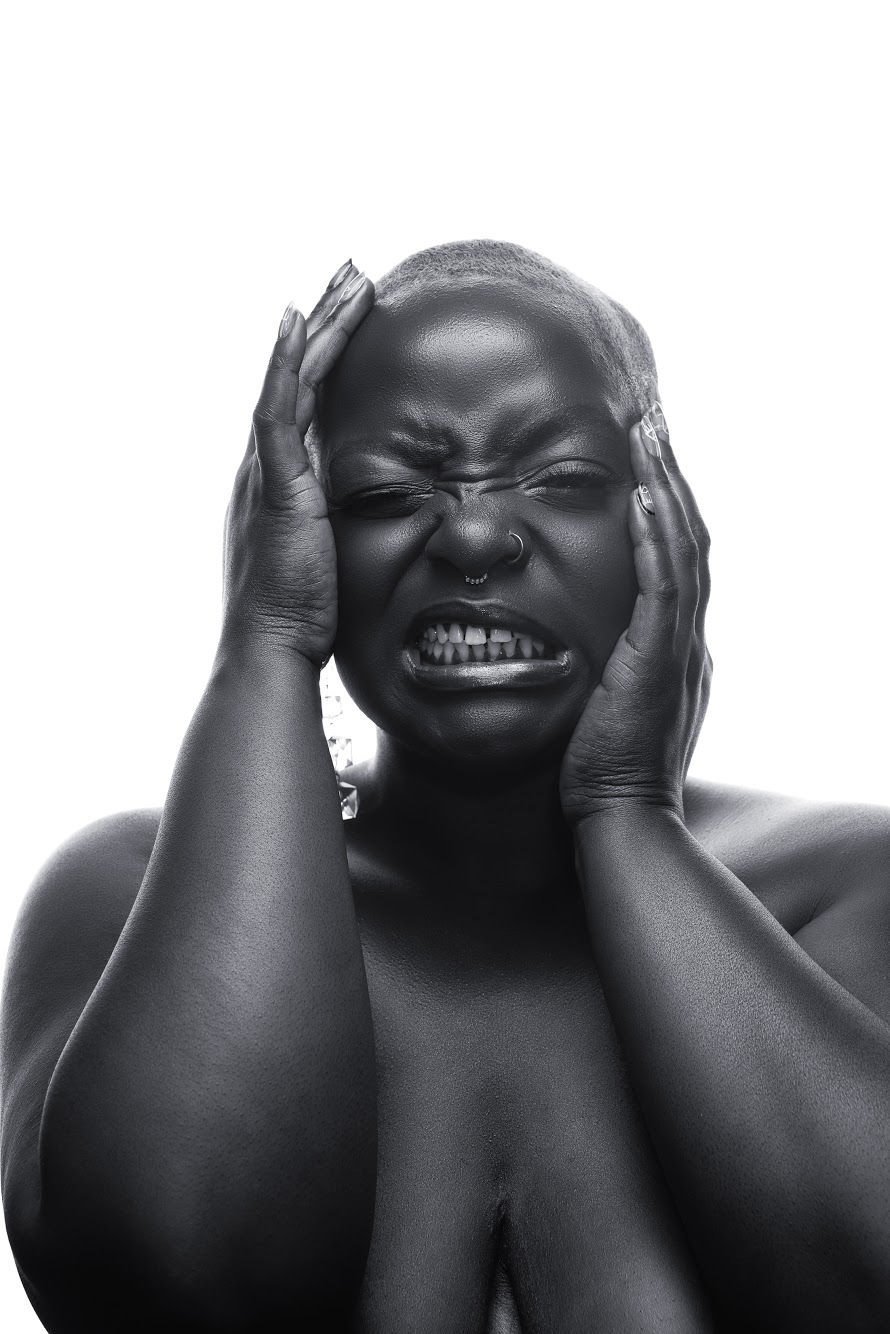
I am in a bigger body.
My voice carries.
In white-dominant and proximity-to-whiteness spaces, that combination is routinely distorted.
Intensity in a thin body is called passion.
Intensity in a dark, bigger body becomes aggression.
Directness becomes bullying.
Clarity becomes hostility.
Boundary becomes threat.
Colorism and fatphobia shape perception before I speak.
Tone policing is often racial policing.
When you layer AuDHD and OCD on top of that misreading, the harm compounds.
I am not a bully because I refuse distortion, but I have been bullied because of others lack and distortion.
I am not aggressive because I am precise.
You are uncomfortable because I do not shrink.
That discomfort is not my disorder.
What Triggers My OCD
Family.
Cars.
Social Media.
Careless engagement.
Dismissal masked as concern.
Extraction of ideas without attribution.
Gaslighting dynamics.
Institutional harm.
Repetitive physical tasks (dishes, skincare rituals, movements I’ve done over a lifetime) can also trigger mental loops. Repetition in the body can activate repetition in the mind.

When triggered, my brain attempts to:
Rehearse conversations
Pre-solve conflict
Scan for threat
Tighten control
Loop through possibilities
This is neurological.
It is not drama.
This website is part of redirecting those loops from defense to creation.
This Website Is Redirection

These are not random offerings.
They are structured redirection of a nervous system that learned to survive through vigilance.
You are witnessing what happens when protective loops are reoriented toward creation.
That process requires boundaries.

Boundary for Engagement

If you are here:
Engage with care.
Do not weaponize my clarity against me.
Do not flatten neurodivergence into trend identity.
Do not tone police my body.
Do not provoke and then call my response aggression.
Do not extract and rename my work.
AuDHD is real.
OCD is real.
Colorism is real.
Institutional harm is real.
And I am no longer available for distortion.
If you cannot engage responsibly, this is not your wata(ring) w(hole)
Final Clarity
I am not “too much.”

I am highly perceptive.
Highly sensory.
Highly patterned.
Highly embodied.
OCD developed because that configuration was never met with safety.
Now it is being met with structure.
That structure lives here.
Devotional
Ancestors who walk with heat in their hands —stand near.
Those who knew difference before diagnosis.
Those who carried pattern in bone.
Those who were called strange, difficult, excessive, other —and were holy anyway.
I speak to the lineage behind my eyes.
The ones who hear tings before they are spoken.
Who see tings in the periphery of power.
Who know tings in the body before language arrives.
If vigilance was the altar I was placed on,
I step down now.
If grooming shaped the early script,
I revise it in this lifetime.
If “weird” was the word they used
for cosmic wiring they could not name,
I take it back and return it to its origin —
signal. sight. seer.
Dark skin is not threat.
Bigger body is not excess.
Clarity is not cruelty.
My nervous system is not malfunction.
It is meteor memory.
It is star-coded pattern recognition.
It is altar’d — U Astro Me — calibrated through survival.
To the ancestors who survived without diagnosis —
I name it now.
To the parts of me that built armor out of loops,
that touched tings twice to stay safe,
that moved tings into order so harm could be tracked —
you may unclench when ready.
I am not too much.
I am tuned.
May what I see tings of become creation.
May what I know tings of become structure.
May my boundaries orbit clean.
May my work feed what tried to feed on me.
I remain.
Aligned.
Seen by what made me.


Comments