top of page
Bespokecurry-Top-Menu-Starry-Riso-BackgroundJPG
Geometric red triangle symbol beside a single vertical slash against black space. This symbol represents Trans Learn Tings as transition, rupture, self-definition, nonlinear becoming, and frameworks for learning beyond imposed systems.
Bright green spiral snail with textured shell and soft glowing body resting against a pale background. This symbol represents Mbegu ya Ardhi, “Seed of the Earth” in Swahili, as the Bespokecurry blog space for slow growth, grounded learning, observation, embodied writing, and ideas unfolding over time through lived experience.
Yellow and red octopus with curling arms and textured detail. This symbol represents About Kiing Curry through intelligence, multiplicity, self-awareness, creative reach, and many forms moving from one body.
Bright green and deep red crab with raised claws and wide stance floating against black space. This symbol represents The Lab as sideways thinking, testing systems, experimentation, structural disruption, and unconventional pathways of knowledge.
 Deep maroon fish with green and coral red markings, facing forward like a small signal moving through water. This symbol represents The Knewsletter as recurring messages, updates, and living transmissions from the Bespokecurry cosmos.
Flowing water lines beside a dark radiant starburst with grounding bar beneath it in earthy brown and green tones. This symbol represents Fungi Tings as layered ingestion, underground transformation, decomposition, fungal intelligence, and deep internal processing beneath the surface.
Small multicolored fish moving together in layered schools across open space. This symbol represents The Tings as interconnected categories, moving parts, collective knowledge systems, and many small ideas traveling together through the Bespokecurry waters.
Three deep red African masks grouped closely together with carved facial markings and elongated forms. This symbol represents the Bespokecurry Cosmos as multiplicity, ancestral signal, layered identities, collective memory, and interconnected creative worlds.
Three flowing wave lines in layered blue and green gradients floating against black space. This symbol represents the Six Waters and The Wata(ring) Whole as movement, emotional drift, embodiment, atmospheric flow, and interconnected states of being across the Bespokecurry cosmos.
Small green and deep red sea snail-like organism with a large eye and soft rounded body. This symbol represents The Exploration as wandering, adaptive learning, curiosity, experimentation, and movement through unknown waters.
Blue and green shell-slug form with ridged texture and a soft glowing outline. This symbol represents the Embodiment Diagram as structure, sensation, regulation, and inner movement held inside the body.
Circular afro-like form paired with flowing water lines in magenta, green, and violet tones. This symbol represents the Afroscape Field Guide as embodied Black knowledge, Afro theory, hair and body systems, texture, atmosphere, and living archives of the self.
Bright orange cephalopod with curling tentacles and glowing blue edges floating against black space. This symbol represents Litm(us) and Black Beauty School as transformation through chemistry, fluid identity, Black beauty knowledge, body experimentation, texture, color theory, and the constant reshaping of self through creative practice and embodiment.
Three flowing wave lines beside a radiant starburst symbol in purple and blue gradients. This symbol represents Six Waters Cannabis Field Notes as ingestion, altered sensing, embodiment, atmospheric expansion, and cannabis moving through the waters of the body.
Flowing water lines beside a radiant starburst partially surrounded by a soft blue cloud form. This symbol represents the Terpene Index as aromatic atmosphere, sensory mapping, vapor, plant chemistry, and environmental mood systems moving through the body.
Multicolored school of small fish moving together in layered rows. This symbol represents the Members Area through collective movement, shared direction, community rhythm, and many bodies traveling through the same current.
Circular bracelet made of glowing multicolored cowrie shells and translucent beads arranged in a continuous loop. The bracelet represents adornment, material culture, ancestral connection, object-based storytelling, and wearable archives within Bead & Cowrie.
Green and red jellyfish with long trailing tendrils and a glowing outline. This symbol represents the Wata(ring) W(hole) through flow, depth, unseen systems, drift, sting, and water memory.
Deep red seahorse with curled tail and textured body floating in open space. This symbol represents the Bespokebook Portfolio as curated creative work, intentional display, archival storytelling, and carefully held artistic worlds.
Claymation-style Black scuba diver with bright orange curls floating underwater in colorful diving gear with bubbles rising beside them. This symbol represents the Bespokecurry Cosmos paid subscription space as deep exploration, immersive learning, protected creative worlds, and guided movement through the layered waters of embodiment, theory, art, and transformation.
Deep maroon and chocolate stingray with a long tail and glowing gold texture. This symbol represents BlaxkCurry Productions through grounded movement, quiet power, deep knowledge, and gliding creative force

On Stage Management and the Architecture of Access

"The ability to understand that smooth experiences do not happen naturally.

They are designed."
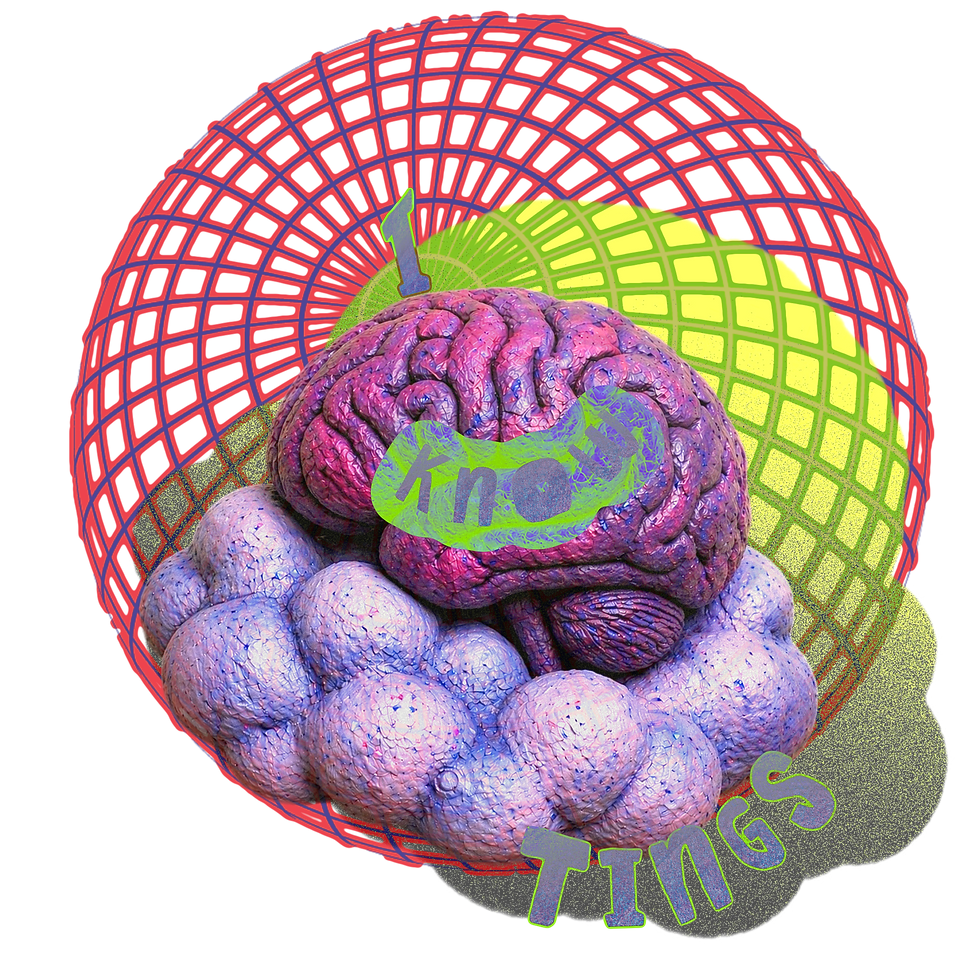


Surreal Afroscape-inspired graphic featuring a textured pink-purple brain resting on soft cloud-like forms beneath layered neon geometric grids and the words ‘I Know Tings.’ The image combines psychedelic riso textures, warped dimensional shapes, and glowing overlays to represent memory, intuition, consciousness, and expansive inner knowledge within the Bespokecurry cosmos.
I Know Tings explores neurodivergence, OCD, autism, embodiment, plant medicine, regulation, memory, and the many ways the body communicates before language arrives.

I Know Tings explores neurodivergence, OCD, autism, embodiment, plant medicine, regulation, memory, and the many ways the body communicates before language arrives. These essays trace signals that are often dismissed, pathologized, or misunderstood, asking what becomes possible when we learn to listen to the body’s own ways of knowing.


On Stage Management and the Architecture of Access

Claymation-style portrait of a Black stage manager seated at a desk beneath the title “Stage Manager of the Cosmos.” Surrounded by planets, cue pathways, notebooks, community gatherings, and floating worlds, the figure reviews a prompt book filled with checklists, intentions, stories, and care practices. Notes throughout the image emphasize access, communication, safety, rest, joy, and community-building.
For me, stage management has never been about control. It is the practice of creating the conditions for people, stories, and possibilities to arrive. Every cue is a relationship. Every schedule is a care structure. Every room is a world being tended.

People often tell me I am organized.


I understand why.


I hold multiple degrees. I have managed productions. I have built workshops, websites, classrooms, events, businesses, books, jewelry collections, and an entire speculative cosmology called the Bespokecurry Cosmos.


From the outside it can look like organization.


Color-coded folders.


Calendars.


Spreadsheets.


Production schedules.


Prompt books.


Cue sheets.


The illusion of a person who simply enjoys structure.


But organization was never the point.


Survival was.


Long before I understood I was autistic. Long before I understood OCD. Long before I had language for disability. Long before I understood how often I was being forced to adapt to systems that were not built for me.


I became very good at noticing things.


The speaker placed directly beside the backstage table.


The actor who was about to have a meltdown.


The missing prop.


The schedule conflict nobody had accounted for.


The tension growing between collaborators before the argument happened.


The production manager forgetting to communicate information that would create chaos three weeks later.


The audience flow issue.


The accessibility issue.


The problem behind the problem.


People called this organization.


What it actually was was environmental awareness.


I became a stage manager because stage management rewarded skills I had already spent my life developing.


The ability to perceive relationships.


The ability to anticipate friction.


The ability to hold large systems in my head simultaneously.


The ability to understand that smooth experiences do not happen naturally.

They are designed.


What fascinated me about theatre was never the spotlight.


It was the invisible architecture holding the spotlight up.


Most people see a performance.


A stage manager sees conditions.


A chair placed six inches too far downstage.


An entrance that arrives three seconds too late.


A lighting cue.


A costume preset.


A communication chain.


A contingency plan.


The audience experiences magic.


The stage manager experiences infrastructure.


I was good at that work.


Very good.


And yet I eventually found myself pushed away from the industry.


For years I struggled to understand why.


The answer became clearer only after my autism diagnosis.


The very traits that made me exceptional at the work were often the same traits institutions struggled to accommodate.


The hyper-awareness.


The sensitivity.


The need for clarity.


The desire for communication.


The ability to perceive complexity.


Organizations were happy to benefit from those capacities.


They were less enthusiastic about supporting the person carrying them.

This is not unique to theatre.


In fact, I now think it is one of the central contradictions of accessibility work.

Many institutions consume accessibility while refusing to acknowledge the labor that creates it.


When a performance runs smoothly, people assume it happened naturally.


When a workshop feels welcoming, people assume it happened naturally.


When an event feels organized, people assume it happened naturally.


Nobody sees the labor required to build conditions where people can thrive.


And because the labor remains invisible, the people performing it often become invisible as well.


For a long time I thought accessibility was primarily about physical access.


Ramps.


Elevators.


Accessible bathrooms.


These things matter.


They save lives.


But my understanding of accessibility has expanded dramatically over the years.

Accessibility is also communication.


Accessibility is predictability.


Accessibility is preparation.


Accessibility is sensory awareness.


Accessibility is reducing unnecessary uncertainty.


Not every person entering a room is entering from the same place.


Some people arrive already exhausted.


Some people arrive overstimulated.


Some people arrive masking.


Some people arrive carrying trauma.


Some people arrive managing chronic pain.


Some people arrive navigating neurodivergence.


Some people arrive calculating every variable in order to feel safe enough to participate.


And yet most event planning assumes a mythical participant.


A normal participant.


A participant who can adapt endlessly.


A participant who requires nothing.


Recently I found myself creating a technical rider for workshops through BlaxkCurry Productions.


When most people hear the phrase technical rider, they imagine absurd celebrity requests.


A particular brand of bottled water.


Imported flowers.


Furniture specifications.


The mythology of the diva.


What I discovered while building ours was something very different.

I was asking for things like:


Who is our point of contact?


Where do we unload supplies?


Can we access the room early?


Will we be located beside loud speakers?


What supplies are being provided?


Who should we call if something changes?


In other words, I was asking for information.


I was asking for clarity.


I was asking for conditions that would allow us to arrive prepared rather than overwhelmed.


And I noticed something fascinating.


After years of minimizing my needs, these requests felt extravagant.


The requests themselves were completely reasonable.


But asking for them felt radical.


That realization revealed something uncomfortable.


Many of us have become so accustomed to inaccessible systems that basic access feels excessive.


Claymation-style illustration of a Black stage manager standing beside a large accessibility control board. Colorful pathways connect icons for water, rest, food, arrival, quiet, communication, movement, community, and care to scenes of people gathering, resting, eating, and connecting. Handwritten signs read “Conditions Create Participation,” “Care Is Our Technology,” and “Build the Conditions. People Will Thrive.”
Accessibility is not an accommodation added at the end. It is infrastructure built from the beginning. Water. Rest. Food. Arrival. Quiet. Communication. Care. Participation becomes possible when the conditions for participation exist.

We have confused preparation with privilege.


We have confused communication with entitlement.


We have confused accommodation with special treatment.


The rider taught me something else as well.


For years my spouse and I facilitated events while absorbing enormous amounts of preventable stress.


Pop-ups.


Markets.


Workshops.


Community events.


Many of them happened during periods of intense instability in our lives.

Including periods when we were homeless.


We would arrive overstimulated.


Leave exhausted.


Sometimes argue afterward.


At the time it felt personal.


Now I understand it differently.


The nervous systems involved were carrying more labor than the event itself required.


The problem was not us.


The problem was missing infrastructure.


Every difficult event became data.


Every chaotic setup revealed a missing system.


Every communication breakdown revealed a missing process.


Every accessibility issue revealed a missing question.


The rider became the accumulation of those lessons.


A document shaped by lived experience.


Not a list of demands.


A map.


A teaching tool.


An operating manual.


And perhaps that is why creating it felt strangely familiar.

Claymation-style open prompt book filled with maps, diagrams, and community pathways. Pages feature the Six Waters, Afro ABCs, jewelry maps, ancestor pathways, workshop schedules, and community care systems. A stage manager sits at the center holding a cue list while signs around the book reference stories, access, liberation plans, joy practices, seed keeping, and future dreams.
A prompt book is more than paperwork. It is a living archive of relationships, stories, routes, contingencies, and care. Every page holds a possibility. Every cue creates arrival.

Because I have been building operating manuals my entire life.


Theatre taught me how.


Autism refined the skill.


Disability deepened the necessity.


The Bespokecurry Cosmos expanded the framework.


What I once called stage management now appears everywhere in my work.


The website.


The workshops.


The courses.


The essays.


The social media systems.


The visual archives.


The event packets.


All of them are asking the same question.


What conditions allow people to arrive as themselves?


That is the question underneath accessibility.


Not how do we force bodies to adapt.


Not how do we create the appearance of inclusion.


But how do we build conditions where participation becomes possible?


How do we create enough clarity that creativity can emerge?


Enough structure that people can breathe?


Enough communication that people can belong?


The irony is that many people perceive these systems as restrictive.


I have found the opposite to be true.


Structure is often what creates freedom.


The work is rarely the thing people see. The work is the conditions beneath it. Water. Rest. Food. Arrival. Communication. Care.Stage management taught me that accessibility is infrastructure. People thrive when the conditions for participation are intentionally built. EveryBODY deserves a way into the room.

When the nervous system is not fighting chaos, it can finally engage possibility.


The show can begin.


The workshop can begin.


The conversation can begin.


The body can arrive.


And perhaps that is the deepest lesson stage management ever taught me.


The audience remembers the performance.


The stage manager remembers the conditions that made the performance possible.


Increasingly, I believe those conditions are where accessibility lives.


Not in the spotlight.


But in the architecture surrounding it.


On Stage Management and the Architecture of Access

Comments


bottom of page