


✺ Astro Me | The Life That Was Interrupted

Developmentally, my life was interrupted.
The opportunities to safely discover myself were replaced with opportunities to survive.
Those are not interchangeable.
✺ Astro Me | The Life That Was Interrupted
On 1995, Development, and Beginning Again at Forty-Two

For a long time I told people that my life changed when we moved from Denver to Alabama.
That isn’t quite true.
My life didn’t simply change.
It was interrupted.
There’s a difference.
An interruption assumes something had already begun.
It acknowledges there was already movement.
Already direction.
Already becoming.
I’ve been sitting with that distinction ever since I started looking backward through my progressions.
Beyond astrology sorting my childhood, it gave me another map for asking a question my body has been carrying for decades.
Not:
“What happened to me?”
But:
“What was trying to develop before everything changed?”
⸻
When people hear me talk about 1995, it’s easy to imagine a happy childhood that suddenly became difficult.

That wasn’t my story.
My childhood wasn’t stable before Alabama.
There were already signs that I needed support.
There were already adults recognizing that I wasn’t moving through the world like other children.
By the time we moved, I had already attended four different schools in Denver.
Four.
Before middle school.
Looking back now, I don’t think that’s just an interesting fact.
I think it’s evidence.
Evidence that something about my development had already been asking adults to pay closer attention.
Nobody had words like autism.
Nobody talked about OCD the way I understand it now.
Nobody understood PDA.
At least, nobody in my life was willing to let those possibilities become real.
Instead, my parents kept searching for different environments instead of different understandings.
Different schools.
Different expectations.
Different discipline.
Different answers.
But never different questions.
Nobody asked,
“What does this child actually need?”
That question would have changed everything.
⸻
Then came the move.
Denver disappeared.
Friends disappeared.
Family disappeared.
Neighborhood disappeared.
Teachers disappeared.
Everything familiar disappeared.
What replaced it wasn’t simply another town.
It was another worldview.
Mars Hill Bible School.
Conservative.
White.
Deeply racist.
Rigid.
A place that didn’t simply misunderstand me.
It demanded that I become someone else.
Looking back now, I don’t think the move interrupted my childhood.
It interrupted my development.
Those aren’t the same thing.
Children survive all kinds of difficult things.
Development asks something different.
Can this child safely become themselves?
My answer became no.
Not because I didn’t want to.
Because the ecology no longer allowed it.
⸻
When I looked at my 1995 progressions, something caught in my throat.
Leo asks: how do I let myself be seen? Handcrafted clay circular Aries ecology on a black starry background. A cracked seed shell sprouts i
What struck me was how completely the developmental conversation contrasted with the life I was actually entering.
A Progressed Aries Sun with A progressed Aries Ascendant and Moon.
The symbolic language pointed toward emergence.
Toward becoming.
Toward expression.
Toward stability.
And my lived environment demanded the opposite.
Hide.
Conform.
Suppress.
Adapt.
That isn’t astrology predicting trauma.
It’s two different maps describing the same interruption.
One through symbols.
One through lived experience.
Both asking the same question.
What happens when the conditions required for healthy development disappear?
⸻
One memory has stayed with me for decades.
I went to the movies with someone I thought might become a friend.
The chair broke underneath me.
People laughed.
Including the person I came with.
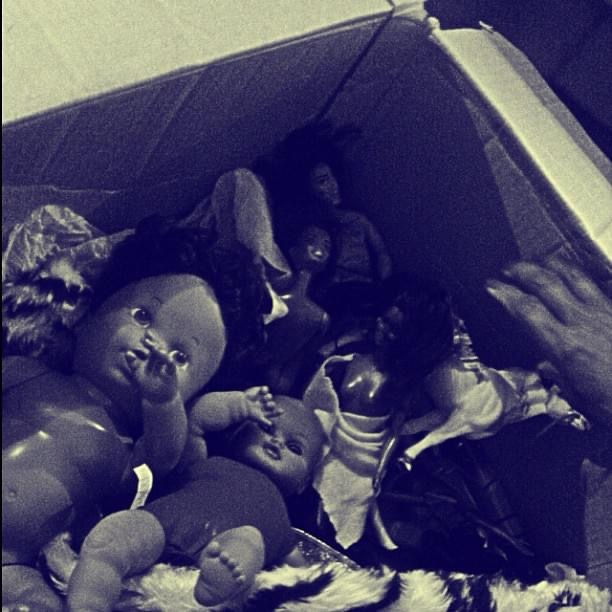
There was love before language for it. Before I had language for becoming, I already had a name, a face, and a life unfolding. Every story begins before it has words. There was an entire childhood before interruption. I return to these photographs not to recover who Some memories arrive through someone else’s arms.
I ran out of the theater and called my mom.
For years I thought the chair was why the memory hurt.
Now I don’t think that’s true.
The chair wasn’t the beginning.
It was confirmation.
By then I had already lost my community.
Already lost familiarity.
Already lost safety.
Already learned that standing out could become public humiliation.
The chair simply told my nervous system what it had already begun believing.
Your body is the problem.
I carried that lesson for decades.
Not because it was true.
Because children often believe the environments they depend on.
⸻
For years I’ve said something that people don’t always understand.
“My life was taken from me.”
Some people hear exaggeration.
Others hear blame.
Neither is what I mean.
Developmentally, my life was interrupted.
The opportunities to safely discover myself were replaced with opportunities to survive.
Those are not interchangeable.
The child who might have explored art differently.
The child who might have studied something entirely different.
The child who might have trusted their body sooner.
The child who might have received support instead of correction.
That child didn’t disappear.
That child’s development was postponed.
There’s grief in that realization.
But there’s also relief.
Because postponed isn’t the same as impossible.
⸻
Lately I’ve been laughing about something that would have sounded ridiculous a few years ago.
I keep saying I’m a toddler at forty-two.
Not because I’m becoming less mature.
Because I finally have choices.
Toddlers spend their days discovering agency.
No.
Yes.
Again.
Mine.
Not yet.
Something else.
Joy doesn’t erase what came later. It reminds us there was always something worth protecting I’ve always been looking. We were still becoming No single photograph could hold an entire childhood. Joy leaves evidence too. A whole future sitting brightly in the sun.
Those tiny decisions are developmental milestones.
They teach a child that they can participate in the world rather than simply endure it.
I don’t think I ever got to finish learning those lessons.
Not in a way my body trusted.
Now my nervous system is trying to complete them.
Sometimes that looks like saying no.
Sometimes it looks like changing my mind.
Sometimes it looks like refusing a binary altogether.
Sometimes it looks like realizing that “something else” is a perfectly valid answer.
For most people, those choices feel ordinary.
For me, they’ve become developmental.
⸻
That’s also why I’ve stopped thinking about healing as fixing myself.
I’m not trying to become someone new.
I’m trying to continue becoming the person whose development was interrupted.
There’s a difference.

People sometimes ask why I make so many different things.
They aren't different, they are all connected.
I think I’ve been rebuilding a developmental ecology.
One where curiosity is safer than certainty.
Where observation matters more than judgment.
Where movement matters more than performance.
Where bodies are believed before they have to scream.
Maybe that’s why this work feels so emotional.
I’m not just making art.
I’m making the environment I needed when I was eleven.
⸻
When I look back at 1995 now, I don’t see the year my life ended.
I see the year my development was interrupted.
Those are not the same story.
An ending asks us to mourn what can never return.
An interruption asks something much more hopeful.
What was still trying to become?
I don’t think forty-two-year-old me is starting over.
I think I’m finally being given permission to continue.
I’ve been thinking about Sankofa a lot lately.
Not simply the English translation.
The Akan proverb itself.
Sɛ wo werɛ fi na wosan kɔfa a, yɛnkyiri.

“It is not wrong to go back for that which you have forgotten.” (Adinkra Symbols & Meanings)
People often stop there.
Or they shorten Sankofa into “go back and get it.”
But sitting with my own life, I don’t think that’s the deepest invitation.
I don’t think Sankofa is asking me to return to the child I once was.
Time doesn’t move that way.
I can’t become eleven again.
I can’t return to Denver.
I can’t undo the move to Alabama.
I can’t rebuild the childhood I should have had.
But maybe that was never the invitation.
Maybe Sankofa isn’t asking me to retrieve the past.
Maybe it’s asking me to retrieve the possibilities that were left behind.
The curiosity that never had enough room.
The artist who learned survival before they learned trust.
The autistic child whose differences were managed instead of understood.
The body that kept speaking long before anyone around it knew how to listen.
Those parts of me didn’t disappear.
They waited.
That’s what moves me most about the Akan proverb.
Sɛ wo werɛ fi na wosan kɔfa a, yɛnkyiri.
It is not wrong to go back.
Not because the past can be recreated.
But because there is wisdom, relationship, and unfinished becoming waiting there. (Adinkra Symbols & Meanings)
Some things were taken from me.
I won’t pretend otherwise.
There are opportunities that cannot be recreated.
Teachers I never had.
Questions no one thought to ask.
Relationships that never existed.
I grieve those things.
I always will.
But what wasn’t taken was my capacity to continue becoming.
That wasn’t destroyed.
It was interrupted.
I think that’s why being forty-two feels so strange.
I’ve joked that I’m a toddler.
The more I sit with it, the less it feels like a joke.
Toddlers aren’t simply learning how to walk.
They’re learning agency.
No.
Yes.
Again.
Mine.
Something else.
Choice.
I don’t think my nervous system ever got to complete those developmental conversations.
Now it’s asking to finish them.
Every time I choose differently.
Every time I tell the truth.
Every time I say no.
Every time curiosity replaces certainty.
Every time I build another piece of the Cosmos.
I’m not becoming someone new.
I’m continuing a sentence that was interrupted.
Maybe that’s what Sankofa has been teaching me all along.
Not:
“Go back and become who you used to be.”
But:
Go back and retrieve the parts of yourself that never got the chance to become.
That’s the life I’m building now.
Not recovering a former self.
Not chasing a future self.
Continuing the life that was interrupted.
Maybe that’s why this doesn’t feel like starting over. It feels like picking up the sentence exactly where it was left unfinished.
Cosmos Watershed
Watershed | Description |
Companion | |
Origin | Emerged from examining the 1995 progressed chart alongside memories of moving from Denver to Alabama, recognizing the move not simply as trauma but as the interruption of developmental conditions necessary for becoming. |
Expansion | Introduces Interrupted Development as a core Bespokecurry framework. Extends Astro Me beyond embodied physiology into developmental ecology, Sankofa, agency, childhood, and environmental conditions. Establishes Sankofa as a philosophy of retrieving unrealized becoming rather than recreating the past. |
Application | Offers readers a framework for asking not only “What happened to me?” but “What capacities never had the opportunity to develop?” Can be applied to childhood, education, neurodivergence, displacement, family systems, race, embodiment, and healing practices rooted in relationship. |
Lineage | Connects directly to The Body Was Speaking First, the Embodiment Diagram, Six Waters, Afroscape, Hom(e)ies, Development Ecologies, Development Observatories, and Kiing’s evolving work around movement, regulation, developmental ecology, and Sankofa. |
Counter Currents | Trauma treated only as pathology, resilience narratives that erase developmental loss, nostalgia without accountability, developmental psychology divorced from ecology, colonial education, assimilation, perfectionism, binary thinking, individualism, productivity culture, deterministic astrology, and healing framed solely as recovery instead of continued becoming. |
✺ Astro Me | The Life That Was Interrupted


Comments