


What Did Your Eighth Actually Cost?

On Da Left Hand Side of Mushrooms & Roses

Plant Wellness, Mycelial Sankofa & Black Weed Practice
On da left hand side of Mushrooms & Roses explores Cannabis, fungi and plant wellness through Mycelial Sankofa: knowledge moving through roots, bodies, memory, decay, regeneration and return.
This terrain understands medicine as relationship. It holds grief, pleasure, regulation, ritual, access and the ecological conditions that make care possible. It also studies weed culture and Black weed culture beyond criminalization, legalization and the marketplace—beyond the assumption that culture, medicine and ancestral knowledge exist simply to be extracted, packaged and sold.
Wellness here is not purity. It is participation in cycles. Cannabis and fungi are not products waiting to become industries. They are living collaborators within a much older network of Black practice, survival, pleasure, knowledge circulation and communal car
What Did Your Eighth Actually Cost? ◉)) I Hear Tings — The On Da Left Hand Side Playlist

The I Hear Tings stamp opens the Aural World of What Did Your Eighth Actually Cost? through on da left hand side—a playlist where Cannabis is not separated from the Black music, bodies, cities, pleasure, danger, boredom, intimacy, regulation and community that have carried it.
The playlist moves the way access moved: weed songs beside love songs, smoke beside sex, jazz beside hip-hop, Jamaica beside the U.S. South, old records beside new ones, escape beside survival. The Mighty Diamonds’ “Pass the Koutchie” gives the playlist its name and its directional logic: knowledge, plant and relation move through community. Fela’s “Water No Get Enemy” pulls that circulation directly into the Wata(ring) W(hole), while voices from Ma Rainey and Bessie Jones through Nina Simone, Mary Lou Williams, D’Angelo, SZA, Leikeli47, Lucky Daye and beyond refuse the idea that Black Cannabis culture begins or ends with a weed anthem.
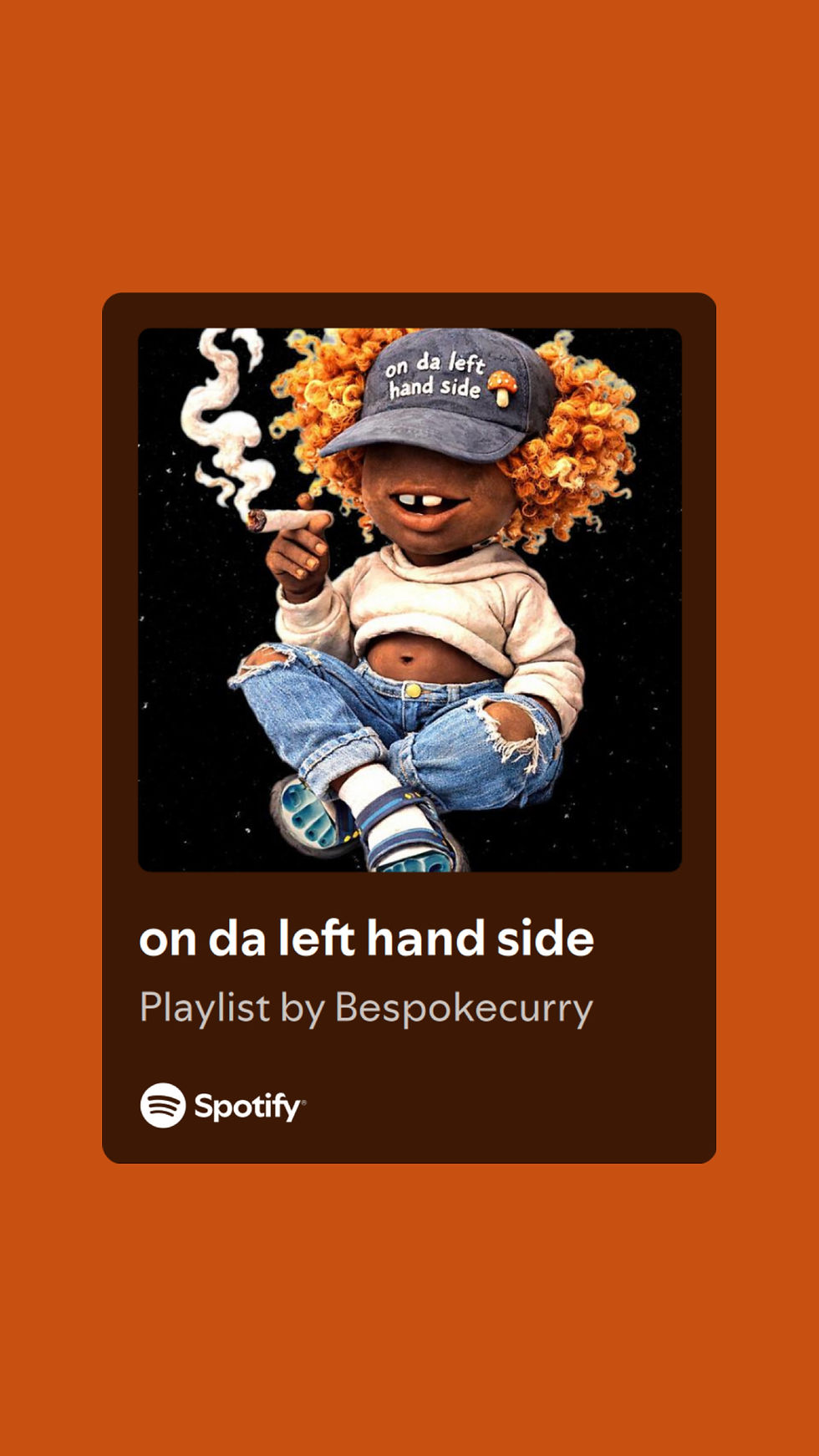
Because the essay asks what an eighth actually cost, the playlist asks something beside it: what was playing while we were finding it, smoking it, sharing it, fucking, waiting, driving, regulating, surviving, resting and trying to feel good inside our own bodies?
This is not a Cannabis playlist because every song is about weed.
It is a Cannabis playlist because Cannabis has been living inside a much larger Black sound ecology the whole time.
What Did Your Eighth Actually Cost?

The Weed Man, Black Cannabis Access + the Price Beyond the Bag
The Weed Man

Everybody loves the weed man.
Or at least that’s how people talk about them now.
I don’t fuck with dispensaries. I still got a weed man.
Okay.
Good for you.
But this morning I was trying to remember the first time I actually had to find the weed man.
Not just buy weed.
Find the person who would make weed available to me.
Because I know I bought Cannabis in undergrad.
Of course I did.
But that almost doesn’t count.
I existed inside social circles where Cannabis moved.
Theatre kids.
knew somebody.
Somebody had some.
Somebody was going somewhere.
Weed appeared because weed was already circulating through the ecosystem I was inside.
I didn’t have to build access.
Grad school was different.
I moved to California by myself, and suddenly I had to figure out where the fuck the weed was.
Which is particularly funny because medical Cannabis was already legal in California.
There were legal pathways to this plant around me.
I just didn’t know how to enter them.
I was also undiagnosed.
I didn’t know I was autistic.
I didn’t know I had OCD.
I didn’t understand Cannabis as one of the things my body had figured out could help me regulate itself.
I knew something much less sophisticated.
I need weed.
So I found weed.
And when I really think about how I did that?
Baby.
Shiesty.
Finding the Weed Man

I used online dating.
Yep.
Because this was before you could open your phone, find seventeen dispensaries, compare terpene profiles, place an order and go pick the shit up.
I needed Cannabis.
Masculine people knew where Cannabis was.
So I found masculine people.
And sometimes getting access to Cannabis meant giving them access to me.
That’s the truth.
Not flirting so somebody might give me weed.
Not letting somebody think something was going to happen later.
Sometimes something did happen.
Sometimes sexual engagement was part of how I gained or maintained access to Cannabis. I am not singular in this, I am simply willing to admit it out loud.
And I don’t need to rewrite that history now to make it more comfortable.
Because I was an undiagnosed neurodivergent Black body without the language I have now for regulation, interoception, boundaries, nervous-system need or what sexual engagement was actually doing inside my body.
What I knew was much simpler:
I need weed.
And the Cannabis was more important to me.
That is the part I think people might have trouble being honest about.
At the time, I did not necessarily care very much about the sexual engagement. If sex, proximity to my body or some other form of bodily access was part of what happened on the way to getting Cannabis, then that was part of what happened.
I needed the weed.
I knew what the weed did for me even when I did not yet have the language to explain why I needed it so fucking badly.
And understanding myself now means I can also understand that something does not have to register as a problem in the moment for it to be impacting the body.
Those are different things.
I can look backward now and recognize costs that I could not recognize while I was paying them.
Not because younger me secretly knew everything I know now.
I didn’t.

That’s the fucking point.
Nobody had actually taught me Cannabis.
They had taught me that weed was bad. That getting high was bad. That certain kinds of people smoked weed. That it was not respectable. Not appropriate. Not ladylike. All that fear-and-shame bullshit that tells a young person what not to do while teaching them absolutely nothing about the plant, the body or why a brain might keep reaching toward it.
And I keep wondering what this story might have looked like if somebody had introduced me to Cannabis without shame and with actual education.
What if somebody had helped me understand what the plant was doing in my body before I had to discover its usefulness by repeatedly needing it?
What if I had been taught about dose. Different effects. Regulation. Altered states. Consent. Dependency. Pleasure. Risk. Why one nervous system might respond differently from another. How to notice what my own body was communicating.
Maybe this would be a different story.
Cannabis and kids is another field note entirely, because there is a real conversation to be had there—and I am increasingly convinced that fear, criminalization, shame and that’s not ladylike are some of the least useful educational technologies we could possibly bring to it.
Young people deserve information that helps them understand their bodies before their bodies have to teach them everything through consequence.
I was solving for regulation without knowing that regulation was the problem I was solving.
Cannabis worked.
So I found Cannabis.
And sometimes my body became part of the exchange required to get it.
That sentence gets considerably heavier now that I understand what Cannabis was actually doing for me.
I wasn’t simply trying to get high.

I was an undiagnosed neurodivergent Black person who had found something that made being inside my own body more possible.
I didn’t have that language.
My body did.
So when I think about what weed used to cost me, I can’t just remember what I paid for an eighth.
Sometimes the price of an eighth was not the price of an eighth.
There was the money.
There was my body.
And there was the Cannabis.
And then there was the access tax.
And I need to be precise here because people can get weird as hell when sex, Cannabis, Blackness and bodily autonomy occupy the same paragraph.
I am not telling this story so somebody can flatten younger me into a victim who secretly understood everything that I understand now.
I didn’t.
I am describing a brain that had spent years being trained toward assimilation instead of understanding.

I had been given religion where I needed information. Respectability where I needed interoception. Rules where I needed context. Shame where I needed curiosity. Performance where I needed somebody to help me understand how my actual brain operated.
So when my body found something that helped regulate it, I did what I had already been trained to do:
I adapted myself around the systems controlling access to what I needed.
That is bigger than weed.
And it is bigger than sex.
The body being part of the exchange did not emerge from nowhere. It belonged to a much older education in making myself legible, useful, agreeable, available or assimilable enough to move through systems that were never particularly interested in understanding what I actually needed.
Cannabis did not create that architecture.
Cannabis entered a body that was already living inside it.
And now, with language I did not have then, I can finally see both sides of the exchange at once:
the plant was helping me regulate. the route to the plant was asking me to keep abandoning myself.
Both can be true.
That is the cost I could not calculate yet.
The Weed Man Has a Geography

I have moved a lot.
And wherever I moved, eventually I had to answer the same question:
Where is the weed?
Which meant another question was usually sitting directly underneath it:
Who is the weed man?
Macon, Georgia gave me one of my favorites.
Not favorite as in excellent service, five stars, would recommend.
Favorite as in I still cannot believe this was a functioning business model.
This person sold nick and dime sacks.
That was it.
I needed an eighth.
They did not sell eighths.
So every time I bought weed, I basically had to stand there and help this person do fucking Cannabis mathematics.
We had to count the sacks.
Add up the quantities.
Tabulate what combination of tiny bags was supposed to approximate the amount of Cannabis I was attempting to purchase.
I am the customer.
Why am I doing inventory?
But there I was.
Because again:
I need weed.
And that phrase becomes important.
Because when access to something your body uses for regulation is precarious, you will tolerate a remarkable amount of foolishness from the person standing between you and the thing.
D.C. Taught Me Funnel

Washington, D.C. gave me the weed man boyfriend.
Mid 2000s.
And some really terrible fucking weed.
Every now and then something good would come through.
But consistency?
Absolutely not.
Sometimes the weed was just—
weed adjacent.
A botanical rumor.
And this was part of where funnel became useful.
Tobacco.
Cannabis.
Stretch it.
Change the smoke.
Make what you have do something closer to what you need it to do.

This is part of the story underneath The Almighty Spliff.
The spliff wasn’t created in some pristine laboratory of intentional plant relationship.
Sometimes the relationship was:
this weed is trash and this is what we fucking have.
So we worked with what was available.
That is part of Black Cannabis knowledge too.
Not just knowing the perfect cultivar.
Knowing what to do when the cultivar is bullshit.
Familiarity Is Not Safety

Then there was Nashville.
One of my longest-running weed men.
I bought Cannabis from this person for years.
Which meant there was familiarity.
There were jokes.
There were conversations.
There were moments that were genuinely light.
There was a relationship.
But relationship does not automatically mean care.
Because eventually the conversation would slip.
Something about my body.
Something sexual.
Some inappropriate comment.
Some misogynistic shit that I now had to navigate because I came here to buy weed and apparently the transaction had once again expanded to include somebody’s entitlement to discuss bodies, sex or whatever else they had decided I should be available for.
And that shit wears on you.

Especially because after enough years I’m thinking:
I have been buying weed from you forever.
Can I simply be a valued fucking customer?
Can the history of my consistent financial support earn me the extraordinary luxury of you not saying some weird shit about my body?
Apparently not.
And this is where I think the romantic mythology around the weed man starts falling apart for me.
Because people talk about the weed man like the relationship itself was evidence of community.
Sometimes it was.
Sometimes it was care.
Sometimes somebody fronted you when you didn’t have it.
Sometimes somebody made sure you weren’t dry.
Sometimes the weed man knew what you liked before anybody was talking about terpene profiles.
There were real relationships there.
But familiarity is not reciprocity.
Familiarity is not safety.
And familiarity does not transform misogyny into community care just because everybody laughed five minutes earlier.
Sometimes I knew exactly what was going to happen.
We were going to laugh.
We were going to talk.
I was going to get my weed.
And eventually this person was probably going to say some shit I did not invite.
Then I would have to decide how much of it I was willing to tolerate because—
I need weed.
Where Were the Black Women?

I can count very few times when my sustained access to Cannabis came through Black women.
They existed.
I bought from Black women a couple of times.
But for whatever reason, those relationships never became the long-term infrastructure through which I accessed Cannabis.
My access was overwhelmingly routed through masculinity.
And I need us to sit with that distinction.
Because saying most of my weed dealers were men does not quite get there.
My access to regulation was routed through masculinity.
That means every time I moved, I wasn’t merely searching for Cannabis.
I was potentially entering another masculine social environment.

Another set of expectations.
Another person whose boundaries I did not know.
Another person who might interpret my body as part of the transaction.
Another person whose feelings I might need to manage long enough to get what I came for.
The weed man wasn’t just selling me weed.
The weed man controlled access to something my nervous system needed.
I just didn’t know enough about my nervous system yet to understand the power dynamic.
And Then There Was the White Weed Boy

Now this is where the story refuses to become tidy.
Because one of my last long-term weed men before medical cards and legal Cannabis became my primary access was a white man.
And I probably gave that motherfucker more money than I gave anybody else.
Why?
Because this person operated like a business.
That’s it.
I contacted them.
They told me what they had.
Sent a mad extensive and organized menu.
I told them what I wanted.
They brought the weed.
I paid for the weed.
And then—
brace yourself—
the transaction was fucking over.

Nobody needed access to my body.
Nobody needed to tell me about my body.
Nobody needed to ask weird sexual questions.
Nobody needed to manufacture flirtation.
Nobody needed to turn the Cannabis transaction into an invitation for intimacy.
Nobody needed me to hang around for forty-five minutes while they performed masculinity at me.
Here.
Weed.
Money.
Goodbye.
Imagine.
And I need to be clear because somebody will inevitably try to flatten this into a racial morality tale that I am absolutely not telling.
This is not:
No.
The question is:
Why did professionalism become a form of safety?
Why was a clean transaction so fucking noticeable?
Why did I pay this person more money, more consistently, for longer?
Part of the answer is simple.
Reliability and boundaries had value.
I was paying for weed.
But I was also paying for the absence of another tax.
The Dispensary

Which brings me to the thing people love to say now.
I would never go to a dispensary.
Dispensary weed is too expensive.
Corporate Cannabis is bullshit.
I still support my weed man.
Okay.
There are legitimate critiques underneath every single one of those statements.
Colonialism and capitalism have absolutely co-opted Cannabis.
People are still living with the consequences of Cannabis criminalization while corporations sell pre-rolls down the fucking street.
Black people helped build Cannabis culture while being disproportionately surveilled, arrested and punished for participating in it.
Legacy growers and sellers have been pushed out of markets they helped sustain.
I know.
I am not here to write a love letter to the dispensary.
The dispensary wants my coin too.
But there is something the dispensary gave me that I cannot pretend does not matter.
A boundary around the transaction.
Native Roots. The dispensary enters the archive. Dispensary 33. Bought the weed. Left with the bag. Truly Infused. TOP FAV. The product becomes specific. The transaction stays bounded. Canndescent. Cannabis organized by desired effect. 
Another dispensary. Another route to the plant.
I can walk inside.
I can ask what Cannabis is available.
I can buy it.
And I can leave.
I do not have to negotiate access to my body in order to negotiate access to the plant.
That matters.
Especially when I look backward.
Because there were situations I put myself in to get Cannabis that I would never tell another person to enter.
People I did not know.
Places I did not know.
Dating sites.
Masculine people whose intentions I could not fully read.
Weird transactions.
Sexual expectations.
Shiesty individuals.
Point blank.
Ancestors and spirit carried me through some shit.
And the fact that I made it through does not mean the infrastructure was safe.
Some of the Weed Men Got Storefronts

And unfortunately legalization did not magically cure misogyny.
Because I have walked into Black-owned Cannabis shops—Detroit immediately comes to mind—and felt the same shit.
That same creepy-ass Black masculine energy.
The staring.
The comments.
The unnecessary familiarity.
The feeling that somebody is looking for an opening that has absolutely nothing to do with helping me purchase Cannabis.
And now I’m standing there thinking:
Sir. You have a fucking point-of-sale system.
We are legal now.
There are receipts.
There is inventory software.
There is security.
There is branding.
There is probably somebody in the back working on the Instagram.
And somehow we still brought the creepy weed man energy into the dispensary.
The law changed.
The masculinity did not necessarily change with it.
Some of the weed men just got storefronts.
And I am tired of that shit.
Because Black-owned cannot be where the analysis ends.
If the space reproduces the same gendered entitlement, the same assumptions about access, the same inability to encounter a Black femme-assumed body without trying to turn a Cannabis transaction into something else—
what exactly did we liberate?
Ownership matters.
So does how people are treated once they walk through the fucking door.
What Did Your Eighth Actually Cost?

This is the part missing when we romanticize the weed man.
Because I understand the nostalgia.
I understand the relationship.
I understand wanting your money to remain outside corporate Cannabis.
I understand wanting to support somebody you know.
I understand missing the person who knew what you wanted before dispensaries started handing us laminated menus full of percentages that don’t tell us nearly enough about what the plant is actually going to do.
I understand.
But I need to know:
Who gets to romanticize the weed man?
Who could knock on the door, get the bag and leave?
Who had to laugh at the joke?
Who had to ignore the comment?
Who had to flirt?
Who had to let somebody believe something might happen later?
Who had to sit somewhere longer than they wanted?
Who had to make their body socially available?
Who had to calculate whether correcting somebody was worth potentially losing access?
Who had to manage somebody else’s masculinity while trying to regulate their own nervous system?
Because that changes the price.
There was the money.
There was the weed.
And then there was everything else.
I can look backward now and recognize that I was repeatedly solving a regulatory problem with whatever infrastructure was available to me.
My body knew Cannabis helped long before I understood why.

So I found it.
Again.
And again.
And again.
Across states.
Across cities.
Across weed men.
I did what I needed to do with the information I had.
But now I have more information.
And that means when we talk about Cannabis access, I need us to talk about all of the access.
Access to the plant.
Access to money.
Access to legal markets.
Access to medical knowledge.
Access to safety.
Access to boundaries.

Access to a transaction that does not require access to the fucking body purchasing the weed.
Because the weed man was never just the person with the weed.
The weed man was infrastructure.
And infrastructure determines who gets through safely.
So yes.
Tell me about your weed man.
Tell me how good the weed was.
Tell me how long you knew them.
Tell me how they always threw a little extra in the bag.
Tell me how corporate Cannabis could never recreate that relationship.
I might even agree with you.
But then tell me something else.
What did your eighth actually cost?
Cosmos Watershed
What Did Your Eighth Actually Cost? traces Cannabis access across an undiagnosed neurodivergent Black body moving through California, Macon, Washington, D.C., Nashville and eventually legal Cannabis markets. Through weed men, nick sacks, funnel, online dating, sexual exchange, misogyny, one unexpectedly professional white weed man and Black-owned dispensaries where old masculine behaviors remain, the essay asks what Cannabis actually cost before the receipt. It refuses both the romanticization of the legacy weed man and the fantasy that legalization automatically creates liberation. Sometimes the eighth cost money. Sometimes it cost time, bodily access, boundary negotiation and safety. Cannabis was regulation before there was language for regulation—and access to the plant was often routed through masculinity.
Watershed Table
Watershed | Tributaries |
Primary Water | ≋✺ The Six Waters — Cannabis |
Water | Turbulent Water |
Secondary Water | Deep Water |
Embodiment | Regulation |
Secondary Embodiment | Integration |
Ting | I Know Tings |
Hom(e)ie | The Weed Man |
Relational Practice | Access |
Framework | Relational Rigor |
Field Method | Embodied memory + geographic retrieval |
Current | Access, masculinity, exchange + safety |
Threshold | Cannabis access ↔ bodily access |
Why Turbulent Water: access to Cannabis repeatedly required navigating instability: illegality, unfamiliar people and spaces, misogyny, sexual engagement, unreliable supply, gendered power and the possibility of material danger. Regulation itself had to be reached through turbulence.
Why Deep Water: present-day Cannabis access sits over histories the body can understand differently in retrospect. The essay descends beneath nostalgia for “the weed man” to ask what forms of labor, negotiation and bodily availability disappeared from the cultural story.
Cosmos Coordinates
Coordinate | What Did Your Eighth Actually Cost? |
Primary Cosmos | ≋✺ The Six Waters — Cannabis |
Primary Ting | I Know Tings |
Secondary Tings | Afro Tings / I Move Tings |
Embodiment | Regulation → Integration |
Primary Framework | Relational Rigor |
Plant Relation | Cannabis |
Relational Current | Access |
Body Field | Neurodivergent regulation + bodily autonomy |
Cultural Field | Black Cannabis culture + weed-man infrastructure |
Gender Field | Masculinity + misogyny |
Material / Economic Field | Illicit market → medical access → legal market |
Geographic Field | California → Macon → Washington, D.C. → Nashville → legal Cannabis markets / Detroit |
Method | Embodied memory / geographic retrieval / cultural analysis |
Central Question | What did your eighth actually cost? |
≋✺ Through the Six Waters
Water | Current in What Did Your Eighth Actually Cost? |
Still Water | Looking backward with more language. The essay begins by remembering: when did I first have to find Cannabis for myself? Still Water makes room to observe earlier behavior without rewriting the neurodivergent body of the past using knowledge available only now. |
Flowing Water | Where is the weed? Cannabis moves through social circles, online dating, weed men, partners, nick sacks, informal networks and eventually dispensaries. Access changes every time the body moves geographically. |
Deep Water | Cannabis was regulation before I knew the word regulation. Beneath what looked like recreational Cannabis use was an undiagnosed neurodivergent body repeatedly finding its way toward something it knew it needed. |
Turbulent Water | The price beyond the bag. Illegality, misogyny, sexual exchange, bodily access, unreliable sellers, inappropriate behavior and potentially unsafe environments complicate the nostalgic figure of the weed man. |
Tidal Water | Access changes form. Social access becomes weed-man access; illicit access becomes medical access; medical access becomes legal retail. Safety increases in some ways while misogyny and masculine entitlement continue appearing in new forms. |
Sacred Water | The body gets to reinterpret its own archive. Ancestors and spirit carried the body through situations that can now be recognized differently without demanding that the earlier self have understood them the same way. The field note becomes communal knowledge: access cannot be measured by availability alone. |
The current running through the Waters is:
remember → locate → recognize → complicate → change → return the knowledge
Ecological Attunement
Primary Coordinate
≋✺ The Six Waters — Cannabis
This is a Cannabis Field Note about access as ecology. Cannabis does not enter the body independently of the infrastructure surrounding it. Who possesses the plant, who controls access, where the transaction occurs, what the purchaser must exchange and whether the body can safely leave are all part of the Cannabis relationship.
Coordinate Constellation
Cannabis → Neurodivergent Regulation → Need → Access → Weed Man → Masculinity → Sexual/Bodily Exchange → Safety → Legalization → Dispensary → Black Cannabis Culture → Community
Embodied Retrieval Coordinate
The essay looks backward without requiring the earlier body to possess present-day language.
The movement is:
undiagnosed neurodivergent body ↕ Cannabis need without regulatory language ↕ informal access ↕ masculine gatekeeping ↕ bodily/sexual exchange ↕ continued Cannabis regulation ↕ medical + legal access ↕ present-day recognition
The retrieval does not exist to declare every earlier sexual encounter traumatic or to manufacture a victim narrative that the body did not experience in that way at the time.
It allows a more complicated truth:
Cannabis could have been worth the exchange then, while the body can understand the cost of that exchange differently now.
Relational Rigor / Ecological Attunement
The essay refuses:
weed man = community / dispensary = capitalism
and the equally flattened reversal:
weed man = danger / dispensary = safety
Instead:
Who controls access?
What does access require?
What is being exchanged besides money?
Who gets to complete a simple transaction?
Who has to manage masculinity?
Whose body becomes part of the price?
Does familiarity produce care?
Does Black ownership produce relational safety?
What changes when the market becomes legal?
What does not change?
What did the Cannabis provide?
What did access to that Cannabis cost?
Ecological attunement expands Cannabis access beyond whether Cannabis is technically obtainable.
The plant can be available while safe access to the plant is not.
Cosmos Constellations
Constellation | Connection |
≋✺ The Almighty Spliff | The strongest immediate connection. Funnel, scarcity, unreliable Cannabis and weed-man infrastructure provide lived context for the tobacco/Cannabis relationships explored there. Together, the essays ask what Black people do when the amount, quality or form of Cannabis available does not match what the body actually needs. |
≋✺ Cannabis Cannot Heal What the Body Has Been Taught to Fear | Both pieces complicate the idea that Cannabis acts independently of the conditions surrounding the body. Plant relationship includes environment, safety, nervous-system state and what the body must navigate to reach the plant. |
≋✺ Neurodivergence, Regulation, and Plant Relationship | The body identified Cannabis as regulatory infrastructure before diagnosis supplied language for what it was doing. |
Afro Tings | The essay speaks from inside Black Cannabis culture, allowing it to hold community, ingenuity, informal economies and legacy Cannabis practice while interrogating misogyny, masculine entitlement and bodily access within those same spaces. |
I Move Tings | Every geographic move required rebuilding Cannabis infrastructure: Where am I? → Where is the weed? → Who controls it? → How do I get to them? → What will getting it require from me? Movement repeatedly disrupts regulation and requires the body to construct another route toward the plant. |


Comments