


The Mind Is an Ecosystem

Nothing begins from zero.
The body remembers what relationship taught it.
The Mind Is an Ecosystem
Mycelial Sankofa, Neurodivergence + the Ecology of Return

A regulated call does not always need the same answer.
A workout became evidence that something had changed: movement could answer a need that cannabis did not have to answer that day. But the ability to hear that call had a history. Fungi had helped clear enough static for other relationships to become perceptible—and eventually made room for the harder work of integration without the fungi present.
The Mind Is an Ecosystem follows that realization into Mycelial Sankofa, neurodivergence, the malleability of the mind, eldership, family, memory, and the space between what the brain learned under old conditions and what the body knows now.
✺ Cosmos Source Field
No image begins from zero. These are the covers, games, phrases, objects, archives and encounters that entered the field before the artwork took form. They are not instructions to reproduce. They are nodes of contact—visual matter carried into the Cosmos, placed in relationship and transformed into another world.
A mind rendered as architecture, machinery and living terrain. Black vernacular carries a whole boundary in four words. Pattern recognition began as play.
I Hear Tings — Aural World
“Pink Matter” — Frank Ocean

Frank Ocean begins with the brain, then lets pink matter move beyond the skull—into flesh, sexuality, pleasure, desire and the body’s capacity to receive and make meaning. The Mind Is an Ecosystem carries that movement farther. Pink matter is not confined to brain matter. Mind moves through muscles learning kettlebell flow, a stomach recognizing hunger, a nervous system receiving regulation, hair being tended, hands building the Cosmos and relationships with cannabis and fungi continuing between encounters. My mind is not a container suspended above my body. It is an embodied ecology—thinking, sensing, remembering and becoming through every system capable of carrying the signal.
The Mind Is an Ecosystem

Today I worked out.
Nothing extraordinary.
Just enough weight to remind my body that it still belongs to me.
I’m in lean times with cannabis right now. I know more is coming, but for the moment I’m stretching what I have. Normally that would make me anxious because cannabis is medicine for me. It always will be.
But after I worked out today, something happened.
I hadn’t even eaten lunch.
I was dancing around the house listening to music.
My brain was literally like,
“Oh we’re good.”
Not,
“Go make lunch.”
Not,
“Go smoke.”
Just…
“We’re good.”
And I started laughing because I realized I still had to get up, cut my hair, and make something to eat.
That’s when I noticed something I don’t think I had words for before.
Movement answered a regulated call.
It didn’t replace cannabis.
It didn’t become the new answer.
It answered a call.
The Call Was Already There
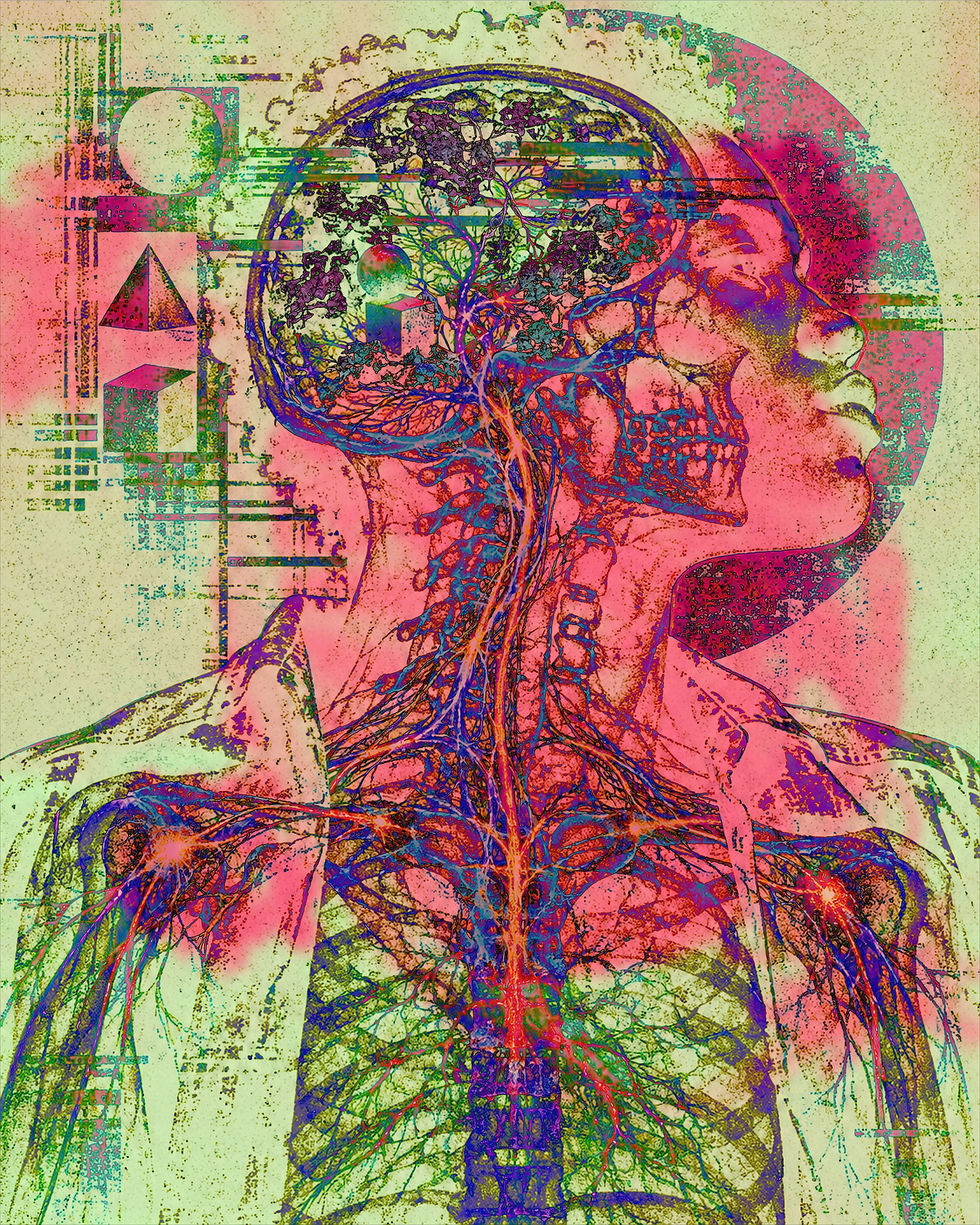
For a long time my nervous system was so full of static that almost everything I did was about getting back to calm.
Get through the day.
Get to sleep.
Get regulated.
What I understand differently now is that clearing enough static to hear another call did not happen simply because I started working out.
I was able to hear movement because of the relationship I had already built with fungi.
That distinction matters.
There were times when I could feel a day beginning to slip and still could not integrate myself back into it. Knowing what might help and having access to the part of my brain capable of doing it were two different tings.
Eat.
Move.
Drink water.
Change the sensory conditions.
Make something.
Go outside.
I could know.
And still not be able to reach.
The static wasn’t sitting politely on the surface waiting for me to make a better decision. It was layered. Some of it had been there long enough to feel structural. Fear. Urgency. punishment. OCD. Autistic overwhelm. Years of having my body interpreted by people who could punish its responses without ever becoming curious about what produced them.
Some of that had become cement.
Fungi helped loosen it.
Not in one revelation.
Not in one heroic trip.
(a lil secret: I don't recommend those at all. EVER.)
Heroic dosing mistakes demolition for rescue. A lifetime of overload is not a brick wall to bomb through. Saving yourself is the journey of learning the terrain without abandoning the body crossing it. You are not a fairytale.
Not because a mushroom arrived and told me what my body meant.
Through relationship.
Through return.
Through time.
Through enough encounters that parts of my own mind became accessible to me differently.
And eventually that changed what I could hear when fungi weren’t there.
When the Medicine Is Not Asking to Be Taken

This is also why my relationship with fungi right now looks different.
I have access to fungi.
They are in my home.
I could take them.
I don’t presently need to.
That is not an interruption in the relationship.
That is part of the relationship.
There is something important to me about refusing the idea that a useful plant or fungi relationship must become constant ingestion.
More does not automatically mean deeper relationship.
Frequency does not automatically mean intimacy.
Intensity does not automatically mean understanding.
If I am dosing constantly, dosing without attention to conditions, moving randomly between amounts, or repeatedly creating extremely strong experiences without learning what happens between them, I can produce more information than my body has infrastructure to interpret.
And information without integration can become another kind of static.
Fungi have been particularly useful to me precisely because they have not required me to reproduce the logic of constant consumption.
The point isn’t to remain altered.
The point is to notice what becomes available and then live long enough inside ordinary conditions to learn what the fuck that availability means.
The Fold Between Old Brain and New Brain

When the static clears, something strange happens.
There’s liminal space.
The old version of me doesn’t know what to do with that space.
It almost feels uncomfortable because for so long urgency decided everything.
Now there’s this quiet moment where my body asks,
“What would you like to do?”
And my old brain still echoes,
“You don’t have any choices.”
That’s the mindfuck.
Because every single day I’m proving otherwise.
I’m writing.
I’m working out.
I’m cooking.
I’m tending to my hair.
I’m building the Cosmos.
I’m regulating.
My body is showing me that I have choices.
My old brain just hasn’t caught up yet.
I don’t think it’s lying.
I think it’s echoing.
It’s speaking from conditions that no longer completely exist.
The echo isn’t today’s reality.
It’s yesterday’s prediction.
And I used to think the work was getting from the old brain to the new one.
I don’t anymore.
There is something happening between them.
A fold.
A lag.
The old prediction enters into relationship with new evidence.
You don’t have choices.
But I just made one.
You can’t recover the day once it starts slipping.
But I just did.
You need this exact doorway.
But another one just opened.
That space cannot be explored entirely through the medicine that helped me gain access to it.
Eventually I have to be there without fungi.
I have to walk around in it.
Make lunch in it.
Miss a cue and find another one.
Get dysregulated and notice.
Remember.
Try.
Correct.
Return.
That is where integration lives for me.
Not only inside what the fungi revealed.
Inside what my body can do with the revelation when the fungi are no longer producing the conditions.
Yesterday Is Also Somewhere I Can Return

This is where Mycelial Sankofa becomes smaller than I originally understood it to be.
Not less important.
Smaller in distance.
Sankofa is so often understood through long return.
Ancestors.
Generations.
Lineage.
What was carried across enormous stretches of time and what can be retrieved from behind us.
That remains part of it.
But Mycelial Sankofa has taught me that I don’t have to travel generations backward for return to matter.
Sometimes I need to go back four years.
Sometimes four months.
Sometimes four days.
Sometimes four hours.
Sometimes I need to remember what my body learned this morning.
That is still return.
A regulated body leaves information behind.
A workout leaves information behind.
A pot of food leaves information behind.
Cannabis leaves information behind.
Fungi leave information behind.
Writing leaves information behind.
The question becomes whether I can find my way back to that information when the conditions change.
The relationship I built with fungi helped me grow what I have called a second skin. But the point of growing another skin cannot be that I need the fungi present every time I need to inhabit it.
The keyword being inhabit.
This is not a costume.
It is fresh skin.
I have to remember that it exists.
I have to find it again.
Mycelially.
Not by reproducing the exact conditions of the first encounter, but by allowing what one node taught me to travel elsewhere in the network.
Movement answered a regulated call because movement wasn’t beginning from zero.
There was already information moving underground.
The Mind Is Not Fixed
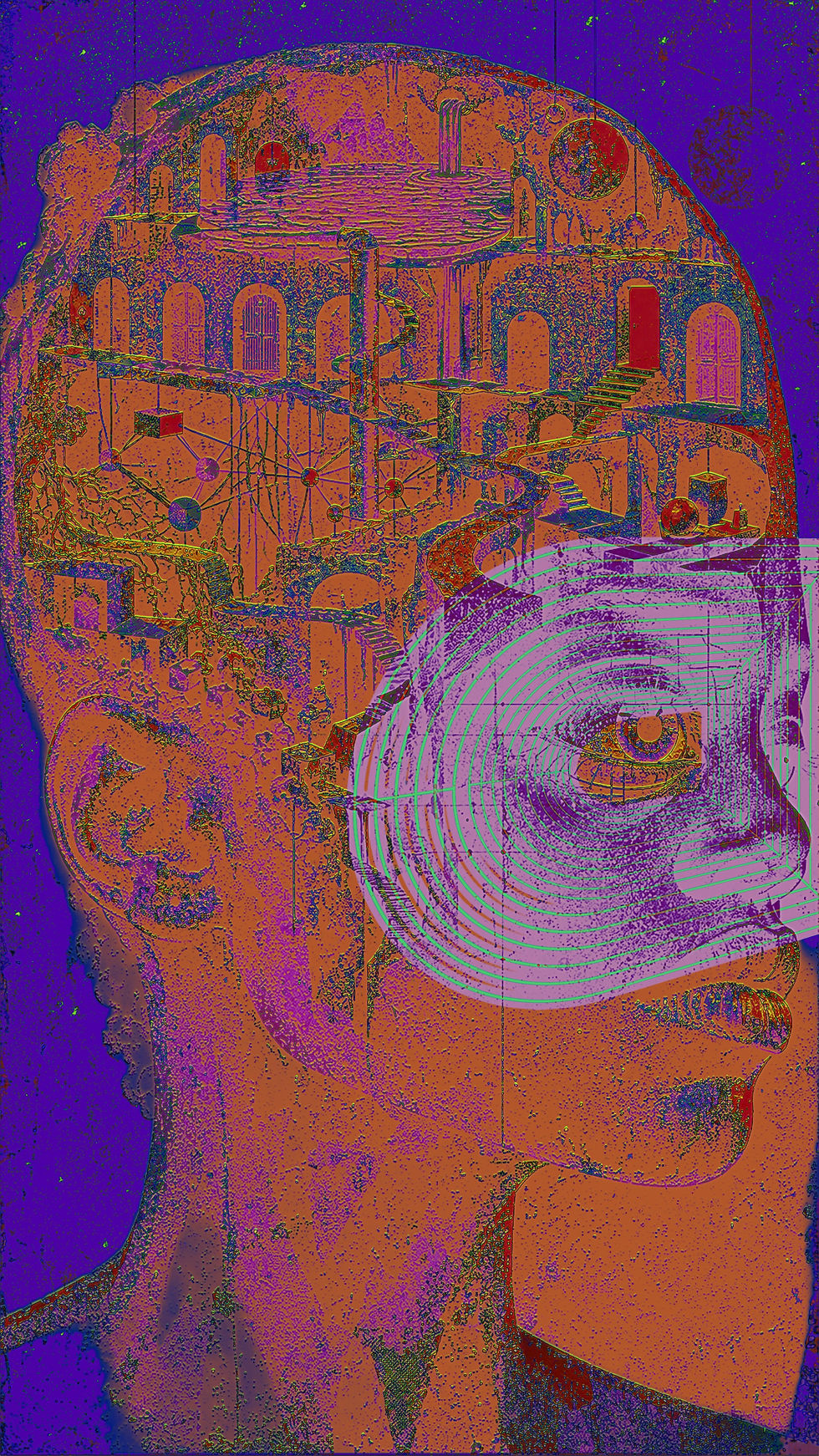
That realization sends me somewhere else.
We talk so much about the mind like it’s fixed.
Especially neurodivergent minds.
As though once you’re an adult, that’s it.
At 42 years old, I don’t buy that anymore.
My mind is incredibly malleable.
That’s actually what makes it beautiful.
It’s also what makes it vulnerable.
Once you understand how malleable a mind can be, you begin to understand how much harm can happen when people shape that malleability through fear, rigidity, punishment, shame, and control.
I’m talking about my autistic OCD brain.
I’m also talking about children.
We build entire educational systems that leave almost no room for children to remain evolving beings.
We expect certainty from organisms literally designed to change.
Then we wonder why so many people spend adulthood trying to remember how to move again.
And then we perform another strange binary.
Child.
Elder.
Young.
Old.
Student.
Teacher.
As though knowledge automatically travels in one direction.
As though age automatically produces relationship.
As though becoming an elder means whatever you carried forward must therefore be ancestral wisdom.
It doesn’t.
Return Is Not Automatically Sankofa

This is where I need more precision around Sankofa.
Going back is not enough.
Retrieval is not enough.
Age is not enough.
Memory is not enough.
Someone can go backward and retrieve harm.
Someone can preserve a hierarchy.
Someone can return repeatedly to a lie.
Someone can freeze another human being at an age when they still had power over them and call that memory truth.
I know this intimately.
My parents held a version of me in place that allowed the conditions of my childhood to remain intelligible to them.
But I grew.
The evidence grew.
My understanding grew.
My language grew.
My relationship with my own body grew.
The story they needed did not.
There was no living relationship capable of receiving new information.
And you cannot call something lineage simply because an older person handed it to you.
You cannot call stagnation ancestral knowledge because it survived a long time.
You cannot call state discipline tradition because enough generations learned to reproduce it.
If an elder has been taught by the state to police a body and passes that policing down, age does not magically transform state violence into ancestral wisdom.
The binary is insufficient.
Youth does not contain all possibility.
Age does not contain all wisdom.
The relationship between what has been carried, what has changed, what has been observed, what has been repaired, and what is being cultivated now can produce something else.
The third.
Mycelial Sankofa requires that possibility.
Return has to remain capable of relationship.
And relationship has to remain capable of changing what we know.
Some Connections Have to Die

That is also why I understand The Alternator Was Already Dying differently from here.
There is no longer a living connection between me and what I have been told I must call family.
That doesn’t make return impossible.
In some ways, it has made another kind of return possible.
I can go back and get myself.
Not their frozen version of me.
Not the child held permanently inside somebody else’s explanation.
Me.
I can return to memory.
Documents.
My body.
The conditions surrounding what happened.
What I knew then.
What I couldn’t know then.
What I know now.
What new information changes.
There is grief in that.
Deep grief.
Mycelial does not mean everything remains connected forever.
Ecology does not promise that every relationship survives.
Some connections stop carrying life.
Some have to decompose before what they were holding can become available for something else.
The end of a connection does not erase the network.
And it does not revoke my access to my own past.
Colonial Wild Fire Wants One Answer

Maybe that’s why I get so frustrated with colonial wild fire.
Colonial wild fire tells us to pick one ting and run it into the ground.
Find one career.
One medicine.
One productivity system.
One identity.
One answer.
Run it until nothing else survives.
But that’s never been how my body works.
My brain has to be multiplicitous.
Granny Gemini tings.
Some days the doorway is cannabis.
Some days it’s lifting heavy weight.
Some days it’s writing.
Some days it’s cooking.
Some days it’s music.
None of those cancel each other out.
And none of them begins from zero.
Each relationship has taught my body something.
Something another relationship may be able to retrieve later.
Something may work today because something seemingly unrelated taught me how to hear it three years ago.
They’re responding to different conditions while remaining capable of communicating across the ecosystem.
That’s not inconsistency.
That’s ecology.
And increasingly, I understand it as Mycelial Sankofa.
The Wata(ring) W(hole) Was Already Doing This

What’s funny is my brain never consciously goes,
“Ecosystem.”
Because this way of thinking is second nature to me now.
Then I laughed.
Of course it’s an ecosystem.
The Wata(ring) W(hole) has always been an ecosystem.
The Six Waters have always been an ecosystem.
The way I return to an essay and discover that what I wrote before was not wrong—it simply had not encountered all of its relationships yet.
That is the pedagogy too.
Knowledge does not have to become disposable because I learned something else.
I can return.
Observe.
Bring another node into contact with it.
Allow correction.
Allow contradiction.
Allow the third.
Allow what I knew then and what I know now to enter into relationship without requiring either one to disappear.
I’m not looking for permanent answers.
I’m looking for relationships.
The conditions are always changing.
Why would I expect my response to remain exactly the same?
Learning What the Conditions Are Asking For Today

Maybe that’s the freedom I’ve been searching for all along.
Not freedom from needing tings.
Not freedom from cannabis.
Not freedom from fungi.
Not freedom from movement.
Not freedom from tending.
And not some fantasy in which regulation means I never become dysregulated again.
Just enough free looseness to navigate my own life.
To wake up knowing there isn’t only one doorway into regulation.
To know a doorway can teach me something even when I don’t need to walk through it today.
To recognize that something I learned yesterday may still be moving underneath what I can access now.
To trust that if one entrance isn’t available today, another relationship within the ecosystem may be asking for my attention.
To know that returning doesn’t require returning unchanged.
And to know that neither age, repetition, history nor survival alone makes something wisdom.
Relationship matters.
Conditions matter.
Observation matters.
Adaptation matters.
Care matters.
What happens between encounters matters.
Maybe that’s what tending has always been.
Not doing the same ting every day.
Not preserving every connection forever.
Not finding the one answer and defending it until nothing else can grow.
Learning how to recognize what the conditions are asking for today.
And remembering that I have been here before without requiring today to become yesterday.
≋✺̱ WARNING LABEL — MALLEABILITY IS NOT LIBERATION

I am talking here about psychedelic relationship built through healing, embodiment, intention, community, care, observation, and integration.
I am not saying that taking fungi inherently makes anyone more liberated.
A malleable mind can be opened toward liberation.
It can also be opened toward hierarchy.
Toward extraction.
Toward domination.
Toward productivity.
Toward conspiracy.
Toward a deeper attachment to the very systems you believe you have escaped.
If you do not have enough relationship with your own body, mind, history, fear, desire, power, and conditioning to recognize what is moving through you, an altered state does not automatically give you that discernment. You can pass through an enormous psychedelic experience, call what happened expansion, and still cement something into yourself that ultimately makes you more useful to the state.
That is why embodiment comes first.
Relationship with self comes first.
Then relationship with the plant.
Then relationship with what the plant surfaces.
Then integration when the plant is no longer producing the conditions.
The opening is not the healing. What you cultivate through the opening matters.
A lot of people have skipped those relationships and gone directly to the psychedelic.
There are repercussions for that.
Inside the body.
Inside community.
And inside the worlds those altered bodies go on to build.
The Mind Is an Ecosystem
COSMOS WATERSHED
Watershed Blurb
The Mind Is an Ecosystem moves Mycelial Sankofa into the intimate timescale of an ordinary day.
Return does not require generations of distance. A body can return to what it learned four years ago, four months ago, four days ago, or this morning. Fungi, cannabis, movement, food, writing, memory, and regulation become nodes through which knowledge travels rather than competing answers to the same problem.
The essay also complicates return itself. What survives is not automatically wisdom. Age is not automatically eldership. Repetition is not automatically lineage. Mycelial Sankofa requires relationship, accountability, correction, care, and the capacity for new information to change what is carried forward.
Watershed | Tributaries |
Watershed | The mind as living ecosystem |
Relationship | Regulation ↔ fungi ↔ movement ↔ memory ↔ return ↔ integration |
Hom(e)ie | The changing neurodivergent body |
Origin | A post-workout moment in which movement answered a regulatory call without cannabis needing to become the answer |
Expansion | Regulation becomes evidence of a larger network of accumulated relationships rather than the result of one intervention |
Application | Recognizing multiple doorways into regulation and retrieving embodied knowledge across changing conditions |
Lineage | Mycelial Sankofa; Black ecological knowledge; embodied pedagogy; Sankofa; neurodivergent self-study |
Counter Currents | Single-answer medicine; psychedelic spectacle; compulsory consumption; fixed-brain narratives; binary youth/elder authority; inherited harm mistaken for ancestral wisdom; colonial productivity; return without accountability |
COSMOS COORDINATES
Coordinate | Entry |
Primary Portal | ≋✺ The Wata(ring) W(hole) |
Connected Waters | Still Water • Flowing Water • Turbulent Water • Tidal Water • Deep Water |
Tings Connections | Fungi Tings • I Move Tings • I Eat Tings • I Know Tings • Cannabis Field Notes |
Primary Methodology | Mycelial Sankofa |
Methodological Practice | Longitudinal embodied observation, return, retrieval, correction, integration, relational comparison |
Cosmos Concepts | The Third • Ecological Attunement • second skin • colonial wild fire • regulation • static • ecosystem • return without sameness |
Geographic Coordinate | The body as ecology rather than fixed location |
Relational Coordinate | What becomes accessible when one relationship carries information into another |
Temporal Coordinate | Minutes ↔ hours ↔ days ↔ years ↔ generations |
Orientation | Past ↔ Present ↔ Future |
Core Refrain | The conditions are always changing. Why would I expect my response to remain exactly the same? |
Expansion Principle | A node does not need to remain present for what it taught the network to remain available. |
COSMOS CONSTELLATIONS
Constellation | Connection |
Mycelial Sankofa | Return operates across both ancestral distance and the short distances of ordinary embodied life. Knowledge can be retrieved, corrected, recombined, and carried into changed conditions. |
Ecological Attunement | Regulation requires observing present conditions rather than reproducing yesterday’s intervention. |
Fungi Tings | Fungi helped loosen layered static and create access; integration includes learning what the body can do when fungi are not presently required. |
The Six Waters Cannabis Field Notes | Cannabis remains medicine without becoming the permanent answer to every regulatory call. |
I Move Tings | Movement becomes one node capable of answering conditions because the body can now perceive and access it. |
I Eat Tings | Food, hunger, preparation, and nourishment participate in regulation rather than existing outside nervous-system ecology. |
The Third | The lag between “old brain” and “new brain” becomes productive territory where previous prediction encounters present evidence and another possibility can be cultivated. |
The Alternator Was Already Dying | Severing a harmful connection does not eliminate access to the past. It can change who is permitted to interpret what is retrieved. |
From Zero Came 2 — Cultivating the Third | Refuses youth/elder, old/new, past/future and other binaries as sufficient containers for relational knowledge. |
The Wata(ring) W(hole) | The larger ecosystem in which different relationships answer different conditions without being required to become permanent solutions. |
Colonial Wild Fire | The counter-system: one career, one medicine, one identity, one authority, one answer—repeated until ecological multiplicity is destroyed. |
Bespokecurry Pedagogy | Knowledge remains alive enough to be revisited. An earlier essay can become a node that later knowledge returns to, corrects, expands, and brings into new relationship. |


Comments